





A milestone in Marine Corps modernization quietly unfolds as Teledyne FLIR Defense lands a stepped-up contract tied to the Organic Precision Fires-Light program. The award, valued at $42.5 million, underscores the shift of drones from niche support to core weapons-system enablers for frontline units.
Recent Trends
- Drone-enabled target intelligence is becoming part of standard fires planning
- Vendors build end-to-end stacks for drone integration in fires
- USMC expands organic drone capabilities within fires modernization
OPF-L, short for Organic Precision Fires-Light, aims to place sensors, targeting and lightweight munitions in the hands of maneuver elements. In practice, this means drone-assisted reconnaissance, rapid target acquisition, and tighter fire control for organic artillery assets. For defense planners, the message is clear: drones are integral to fires campaigns, not a peripheral capability.
Teledyne FLIR Defense brings advanced sensing, imaging, and secure data links to the program, supporting payload integration and rugged, field-ready systems. The contract likely covers integration work, software interfaces, and ongoing support as OPF-L moves from demonstration to routine use. In practical terms, this could shorten decision cycles, increase targeting accuracy, and improve resilience in contested environments.
According to Business Wire, the award aligns with the Marine Corps’ broader push to fuse drones with organic fires capability. The contract’s focus on sensors, interoperability, and system integration highlights a growing reliance on fielded, interoperable drone assets to extend the reach and effectiveness of artillery elements. For defense officials and contractors, the interview ledger points to a crowded, high-stakes market where speed to field, cybersecurity, and supplier readiness matter as much as the hardware itself.
Industry implications are significant. The deal places Teledyne FLIR at the center of a crowded field where sensor fusion, secure data links, and robust autonomy matter. The Marine Corps is pursuing a distributed fires architecture, enabling smaller units to call for precise effects without waiting for large, centralized systems. The procurement signals both demand for rugged, mobile drones and the need for reliable integration with mission data and targeting coordinates. For the broader defense ecosystem, this contract could influence future awards and technology roadmaps, reinforcing the trend toward drone-enabled, organic fires across services.
For readers outside the defense sector, the news matters because it illustrates how procurement decisions shape technology ecosystems. Sensor makers, data-link specialists, and system integrators are aligning their capabilities around OPF-L and similar programs. As the DoD accelerates fielding cycles, issues like supply chain resilience and cybersecurity will increasingly drive bidding and contract structure. The trajectory is clear: the drone-enabled fires paradigm is no longer experimental; it is becoming standard practice in modern warfare planning.
< figure>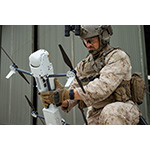
What OPF-L Means in Practice
The Organic Precision Fires-Light program is designed to give Marine artillery teams more autonomy and speed. By integrating drones for target discovery, cueing, and data relay, units can engage targets with higher confidence and in complex environments. This approach aligns with the service’s distributed fires concept, where reach and responsiveness are prioritized over sheer mass of firepower. In this context, the Teledyne FLIR contract helps bridge sensors, software, and field devices into a cohesive, soldier-friendly system.
Frequently Asked Questions
- Q: What does OPF-L stand for?
- A: Organic Precision Fires-Light, a Marine Corps effort to embed drone-enabled sensing and targeting into fires units.
- Q: What does this contract cover?
- A: Likely includes sensor payload integration, software interfaces, data links, and ongoing support for OPF-L capabilities.
Conclusion
The Teledyne FLIR Defense award marks a tangible step in the Marine Corps’ shift toward drone-enabled, organic fires. It signals a broader industry trend: drones are increasingly treated as essential, integrated components of modern fires systems rather than add-ons. As DoD budgets tighten and competition heats up, contracts like this will shape who builds the core sensors, data links, and interoperability layers that keep these programs moving from paper to battlefield reality.

















