
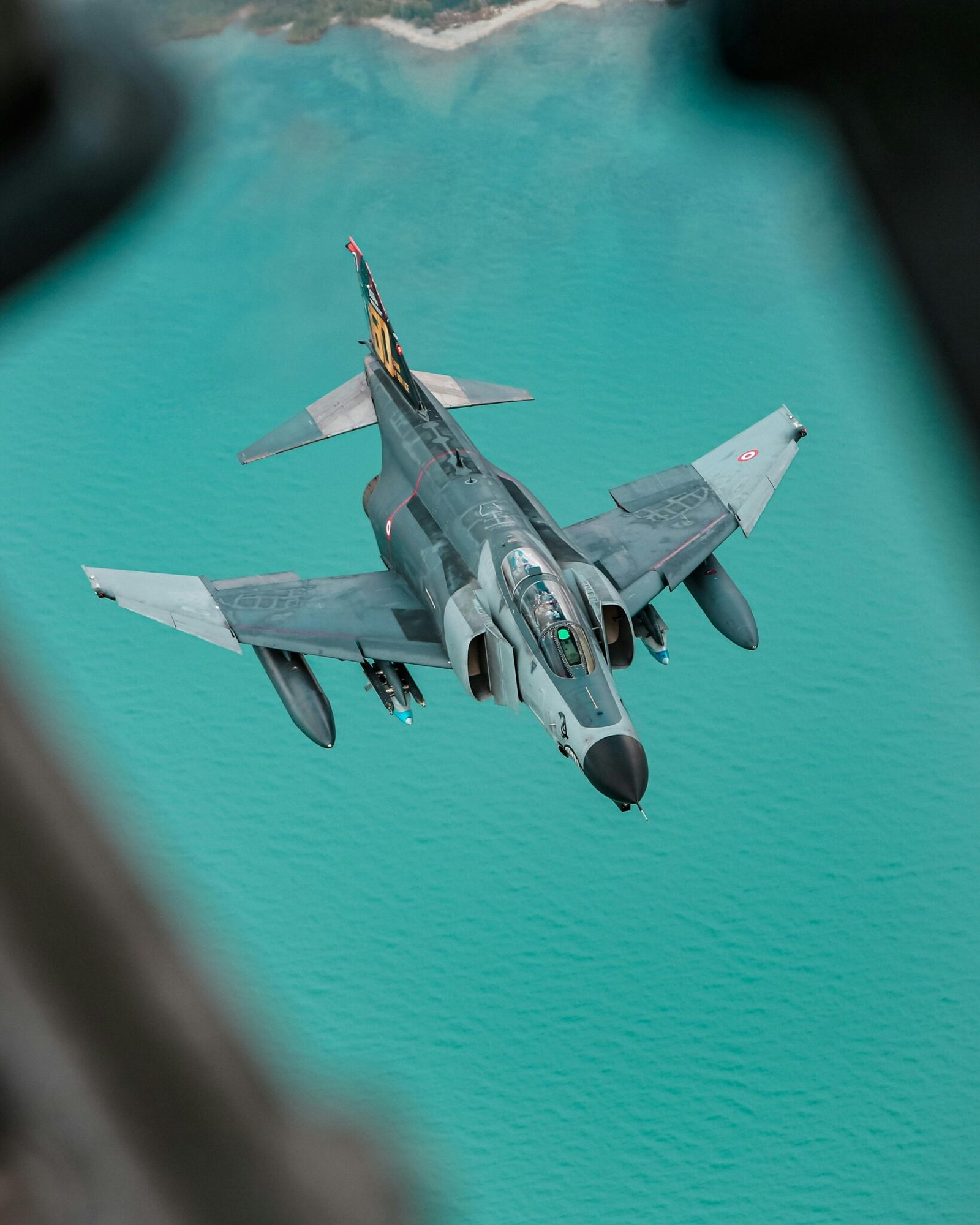




Silicon Valley’s defense bet centers on autonomous wingmen. Shield AI has unveiled a large drone concept, code-named X-Bat, designed to accompany fighter jets as a trusted wingman in future battles.
Recent Trends
- Autonomous wingman programs expand
- CCA trials accelerate
- Defense funding favors multi-vendor autonomy
The X-Bat is described as a shrunken B-2 Bomber in silhouette, still a concept with no contracts signed. The company says the platform would launch and land vertically with a jet engine, carry a full payload, and travel more than 2,000 nautical miles. Pricing is reportedly near $30 million per unit.
Shield AI envisions the X-Bat operating either autonomously or in formation with human-piloted fighters, extending reach and persistence in contested airspace. This approach aligns with the broader push by the U.S. military to field large autonomous aircraft under the Collaborative Combat Aircraft program, or CCA. Other players in this lane include Anduril, General Atomics, and Kratos, all racing to deliver prototypes for the Air Force and Navy. Shield AI has been chosen to provide its Hivemind autonomy software for the program, underscoring the growing role of shared AI stacks in defense drones.
According to Reuters, via The Economic Times, the X-Bat remains conceptual and has not secured Pentagon contracts. Shield AI has pitched partnerships and a plan to test in the first half of 2026, with production readiness anticipated in 2028. This timeline reflects the dual challenge of maturing large autonomous platforms and aligning them with formal military procurement cycles.
Shield AI’s broader footprint in the drone market adds color to the debate. Its V-Bat, a smaller vertical-takeoff-and-landing craft, is already in service with the U.S. Coast Guard for surveillance and reconnaissance. The company has touted V-Bat deployments in Ukraine, noting more than 100 sorties. Shield AI acquired the V-Bat maker in 2021, a strategic move that helped scale its airborne autonomy capabilities even before venturing into the X-Bat concept. Investors continue to back Shield AI, most recently in a roughly $240 million round in March, with backers including L3Harris and Andreessen Horowitz. The X-Bat program, by some accounts, could run as high as $1 billion, a figure Bloomberg flagged as a sign the project will need further capital and industrial partnerships.
In a LinkedIn post, Shield AI acknowledged the obstacles ahead: delivering a system of this scale will be hard, and there will be critics. Yet the company frames the X-Bat as a necessary step in a broader shift toward multi-vendor autonomy stacks that can operate in concert with crewed fighters. For defense planners, the message is unmistakable: autonomy is moving from prototypes to capable systems that can extend a fighter’s reach and endurance. The convergence of industry giants, venture capital, and defense budgets points to a crowded field in the coming years.
What the X-Bat means for the wingman drone market
The X-Bat signals a maturity path for wingman drones that combine long range, vertical launch capability, and autonomous control. If successful, Shield AI would join a select group pursuing large, jet-powered wingmen that can operate alongside strategic bombers and fighters, potentially reshaping air dominance concepts. The broader market already includes rivals and collaborators among defense contractors, each racing to demonstrate reliable autonomy, secure data links, and robust safety controls for high-stakes missions.
Industry and policy context you should watch
The race to field Collaborative Combat Aircraft remains tightly linked to U.S. Air Force and Navy programs. Anduril and General Atomics have already progressed to prototype partnerships, while Shield AI contributes with its Hivemind software and a vision for distributed autonomy. Policy makers will scrutinize how these platforms handle safety, airspace integration, and interoperability across services. Budget cycles, export controls, and foreign supply chains will shape who wins access to large-scale wingman drones and the pace of production.
Investment, risk, and next steps
Investors are watching Shield AI’s ability to translate concept into a production-ready system. The company faces the typical ramp from R&D to government contracts, along with the technical hurdles of ensuring reliable autonomous combat operations. If the X-Bat progresses to 2026 tests and 2028 production, it could redefine supplier dynamics in military aviation, pushing rivals to accelerate their own autonomy roadmaps. For customers, the takeaway is focus on integration: how would a wingman drone blend with existing fighters, command-and-control networks, and stealth considerations?
Conclusion
Shield AI’s X-Bat concept underscores a pivotal trend in modern air power: autonomy as a force multiplier. While the project remains in early stages, the market is already reorganizing around partnerships, software stacks, and multi-vendor autonomy ecosystems. As defense programs move from words to demonstrations, the wingman drone narrative will shape investment, policy, and procurement decisions for years to come.

















