
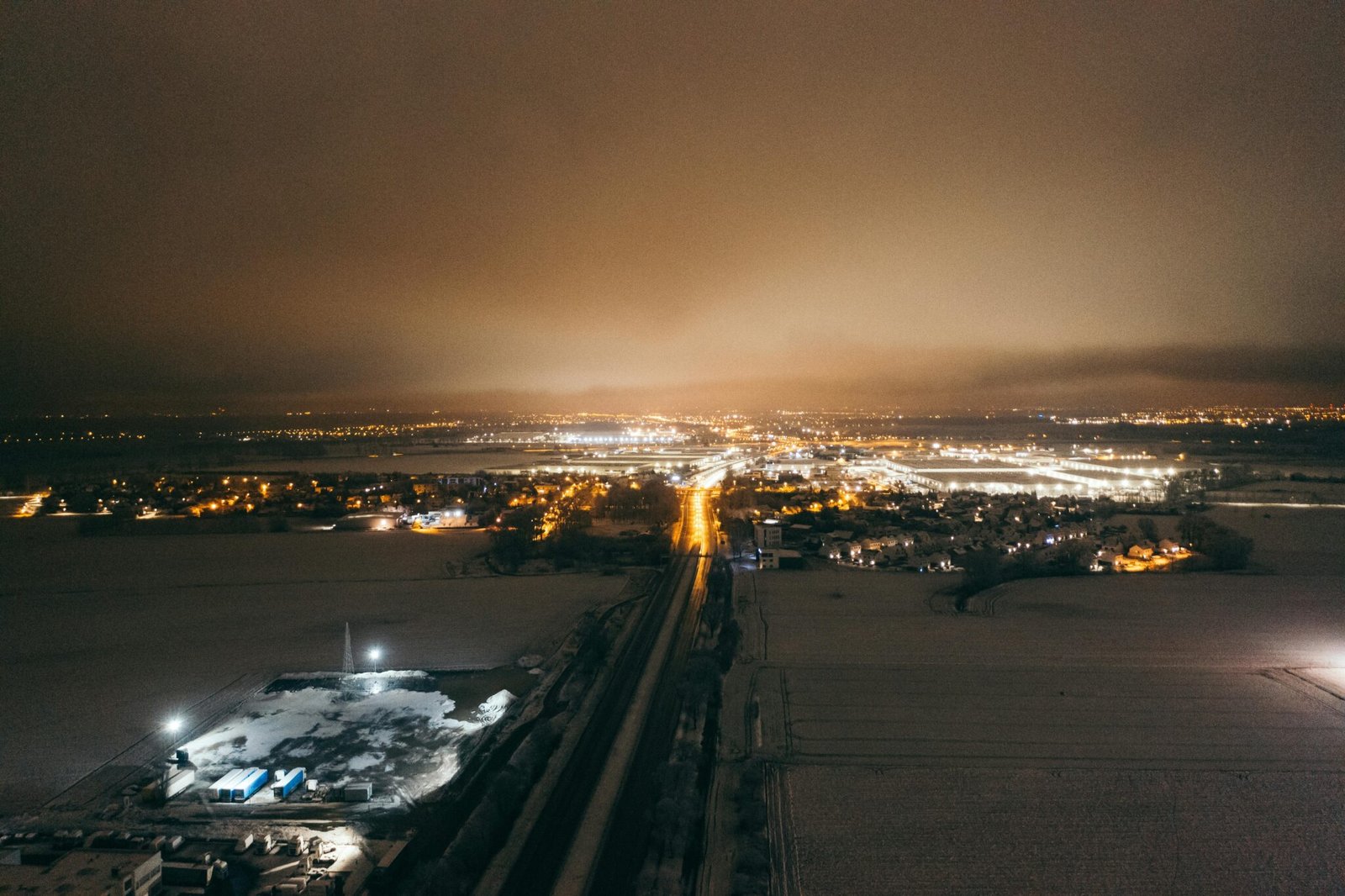




Nighttime Drone Delivery Expands Meituan’s Urban Reach
Meituan is extending its drone delivery program into the evening hours, turning urban air mobility from a daytime perk into a full‑fledged nighttime service for city dwellers. Since the daytime rollout began in 2021, Meituan’s fleet has completed more than 600,000 orders, with an average delivery time of roughly 15 minutes. Those numbers, cited by TechNode, underscore a rapid acceleration in last‑mile speed that could redefine how urban goods move after dark.
Recent Trends
- Nighttime urban deliveries expanding
- Locker-based drop-offs gain traction
- Around-the-clock logistics reshape urban drone use
The pilot is currently live in Shenzhen, where evening operations extend to public spaces such as Talent Park and Haifeng Sports Park. Customers place orders via the Meituan and Meituan Takeaway apps and retrieve items from nearby drone drop-off lockers, a model that blends digital ordering with automated pickup. The focus on park-side routes suggests Meituan is testing both consumer convenience and the safety considerations of operating in densely used urban venues after sunset.
In practice, the new service follows the same core recipe that has fueled Meituan’s daytime success: a tightly choreographed network of drones, ground crews, and a customer delivery interface that minimizes human contact. The shift to night operations implies that Meituan believes its existing logistics backbone—routing algorithms, battery swap cycles, and locker infrastructure—scales effectively under lower ambient light and variable weather conditions seen after dusk. TechNode notes that the Shenzhen rollout is an important proof point for the broader idea that automated, contactless delivery can extend well beyond traditional business hours.
From a consumer perspective, the nighttime service promises the same promise as daytime drone delivery: faster fulfillment, reduced street traffic, and a streamlined pickup experience. For city planners and operators, it signals a potential paradigm shift in how urban congestion might be alleviated if more orders can be efficiently shifted to off-peak windows. For Meituan, the nighttime push is also a test of the business case: will customers pay a premium for late-evening delivery, and can drone solutions maintain strict reliability when city noise ordinances and darker street conditions come into play?
TechNode’s reporting frames the Shenzhen pilot as a strategic step for Meituan’s broader urban logistics ambitions. In practical terms, the company is likely calibrating flight corridors, visual line-of-sight procedures, and geofenced operation zones to ensure consistent performance as operating hours extend. The data behind this expansion—600,000+ orders and a median 15‑minute delivery target—are the kinds of metrics that attract retailers and investors who want to measure the real-world impact of autonomous last-mile services. For readers following industrial drone adoption, the Shenzhen case offers a template for how to fold automation into city life without sacrificing safety or service quality.
For defense planners and city operators alike, the message is unmistakable: if a major consumer tech company can sustain nighttime drone deliveries in a major city, other sectors will follow. Retail logistics considerations—inventory placement, real-time routing, and rapid pickup infrastructure—will likely become focal points for both municipal policy and private investment. As regulators across regions weigh flight permissions and privacy safeguards, stories like Meituan’s nighttime pilot can help gauge the pace at which urban drone programs scale from niche demonstrations to mainstream infrastructure. The Shenzhen effort also raises questions about energy efficiency, drone durability in cooler night air, and how locker networks might evolve to accommodate larger or more diverse payloads in hours outside the typical business day.
Operational and Competitive Implications
From a competitive standpoint, Meituan’s nighttime expansion puts pressure on rival services to consider similar around-the-clock capabilities. The premium on speed and convenience is rising, and drone-enabled deliveries could become a differentiator for consumer apps seeking to outperform conventional couriers during dinner hours or late-night shopping sprees. The implications extend to supply chains and retailers who may recalibrate stock positioning to leverage fast, evening‑hour fulfillment as a differentiator. In short, the Shenzhen pilot is more than a city story; it is a bellwether for how urban commerce could tilt toward faster, more automated last-mile flows.
Technology and Safety Considerations
Technically, the Meituan program hinges on a mature integration of flight control, battery technology, automated drop-off, and secure locker access. The exercise of operating near parks also touches on public safety protocols, airspace coordination, and visibility for both pedestrians and drivers in low-light conditions. As drones operate under these constraints, operators will need robust sensor suites, redundant communications, and resilient routing logic to maintain reliability when the clock shows late hours. For industry observers, the Shenzhen rollout offers a blueprint for evaluating the effectiveness of locker-based delivery as a scalable, low-friction approach to last-mile automation.
Attribution: TechNode reports on Meituan’s Shenzhen nighttime pilot and the accompanying performance metrics, illustrating how this strategy translates into urban logistics advantages and broader market implications. The data and context provided by TechNode help frame why the industry is watching this development closely and how it could inform future deployments in other cities.
What This Means for Meituan and the Market
Measured against its daytime operations, the nighttime expansion reflects both confidence in the underlying hardware and a belief that demand for rapid, contactless delivery persists after sunset. For Meituan, the move could expand the company’s addressable market and unlock new revenue streams anchored in convenience and speed. For customers, it offers a tangible benefit: even late at night, the ability to obtain meals and essentials with minimal human interaction. For the broader drone ecosystem, Shenzhen provides a real-world case study of how to balance speed, safety, and public urban integration in a live metropolitan setting.
Conclusion
Meituan’s nighttime drone delivery in Shenzhen marks a notable step in the evolution of urban logistics. By extending hours, leveraging locker-based drop-offs, and quantifying rapid delivery metrics, the company is testing the resilience and cost-effectiveness of automated last-mile solutions in a real city environment. The implications extend beyond retail convenience to urban planning, regulatory policy, and the competitive dynamic among delivery providers. As the industry continues to watch Meituan’s pilot, the broader takeaway is clear: if consumers crave speed and contactless service, the night shift may become the new normal for drone-enabled commerce.

















