
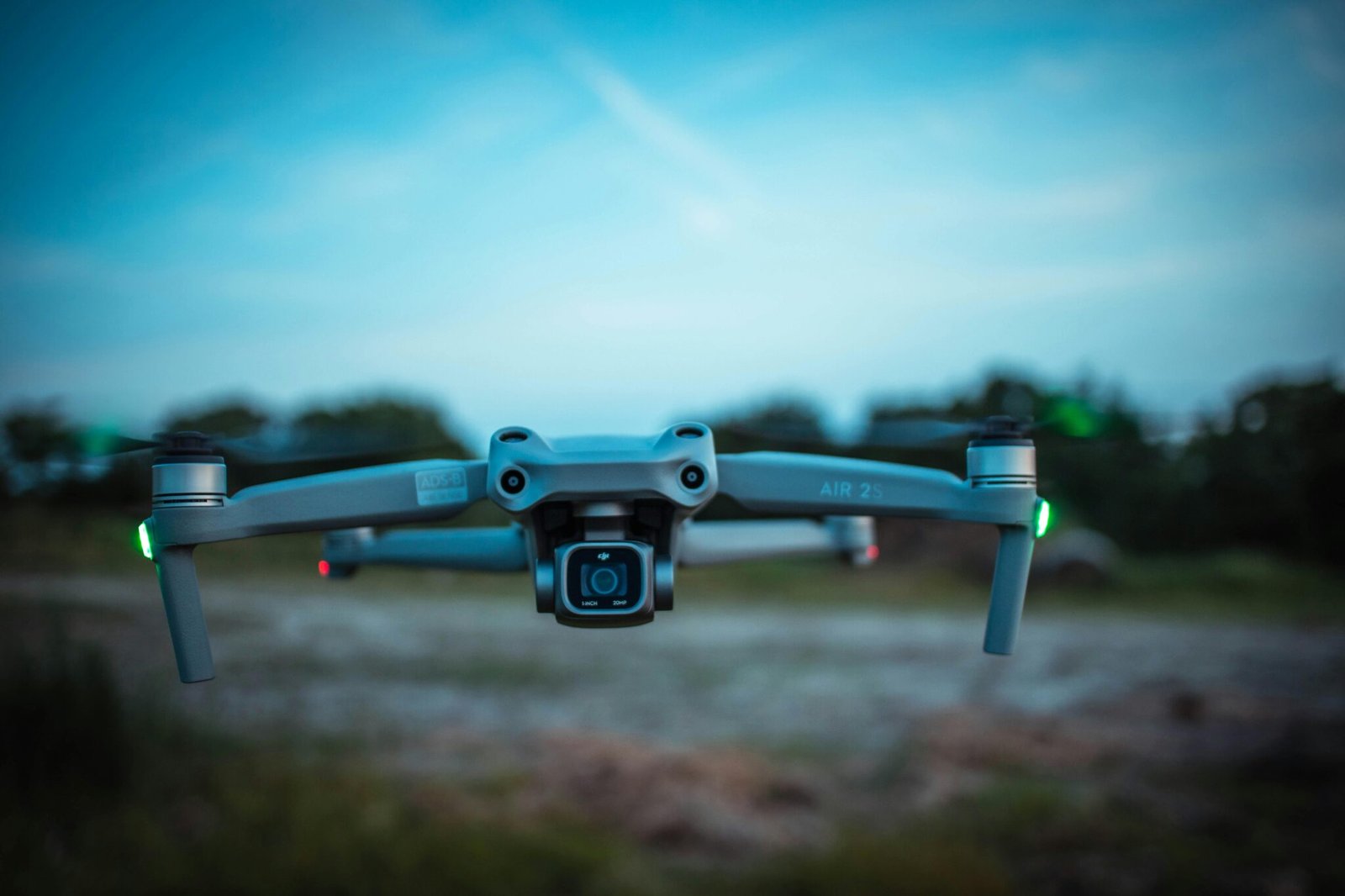




The room hummed with a quiet intensity as a small drone hovered above a testing table, its camera streaming to a laptop that spoke in near real time. A casual observer might think this was a stunt, but the setup is a serious probe into how AI can run where the data is generated. The core idea is simple: push intelligence to the edge, not to the cloud, and you gain speed, privacy, and resilience in security tasks. If we can prove this in a lab, the path to real-world deployments becomes clearer and faster.
Recent Trends
- edge AI accelerates on-device processing
- privacy-first surveillance trends
- drone-enabled autonomous security workflows
The hardware stack behind the demo is intentionally lean. The team showcased a local AI surveillance setup powered by the Qwen3-VL vision-language model, which handles visual input and natural language prompts without sending data to a central server. On-device inference is supported by a mix of GPUs and compact boards, with some configurations using Raspberry Pi-class devices and lightweight cameras. The emphasis is clear: fast, confidential analysis at the edge reduces latency and mitigates exposure of sensitive footage.
In this configuration, the AI model can perform image recognition and object detection with parameter scales ranging from roughly 2 billion to 8 billion. That range gives developers options for accuracy versus speed, a critical trade-off for real-time surveillance tasks. The result is a system capable of identifying specific targets—such as clothing colors or distinctive items—and then triggering automated responses, like a drone redirect or an alert to security staff. When data stays local, privacy protections are built into the fabric of the system rather than bolted on as an afterthought.
According to Geeky Gadgets, the live demo also highlighted practical workflow elements. A repurposed Android phone served as a mobile IP camera, streaming video and capturing snapshots at modest resolutions to demonstrate how the software handles real-time detections. This kind of setup underscores a broader point: you don’t need expensive, purpose-built hardware to test edge AI workflows. Smart combinations of consumer devices and compact compute can prove the concept and accelerate testing for broader adoption.
Live Demo: Local AI Surveillance on Edge Hardware
Why does this matter for security planners and product developers? Latency matters. If a system detects an intrusion or suspicious activity and can react in milliseconds, it changes the calculus for deterrence and response. Running the Qwen3-VL model locally means alerts, logs, and device actions can be generated without the roundtrip time to a cloud service. For enterprises and municipalities exploring AI-powered security, edge processing reduces dependency on network reliability and minimizes the risk of data leakage through cloud channels. It also aligns with rising expectations for privacy by design, where sensitive footage never leaves the device unless a user approves it.
Edge tech and practical use cases
The demo makes a persuasive case for edge computing in security and beyond. Drones can be dispatched to a location upon a positive detection, providing a physical presence that complements cameras and sensors. Cameras with high-grade sensors can run continuous monitoring, while Raspberry Pi-like devices act as the control hub for local AI tasks. Beyond security, the same approach supports inventory checks, facility monitoring, and even environmental sensing where data sovereignty is critical. In other words, edge AI surveillance scales from a single residence to a networked enterprise with predictable privacy and control.
Privacy, policy, and ethics
Edge-driven surveillance raises important questions. How do we ensure transparency about when and how detections trigger actions? Who has access to local event logs, and how long are they retained? What safeguards exist to prevent misuse in public or semi-public spaces? The trend toward privacy by design demands clear governance, robust authentication, and explicit user consent where appropriate. For regulators, the focal point is balancing security benefits with civil liberties and ensuring that on-device analytics do not become a loophole for unchecked monitoring.
Industry implications and market outlook
What we’re seeing is a shift in the security market toward modular, edge-native AI stacks. Vendors are stacking vision-language models with lightweight hardware to offer scalable, private surveillance solutions. For drone manufacturers and security integrators, this creates new product categories: autonomous patrols, smart access control, and event-driven responses that minimize human oversight while enhancing accountability through meticulous logs. The broader implication is a move away from cloud-dependence toward resilient, on-site intelligence that still interoperates with cloud-based systems when appropriate. This is a trend you will hear more about at industry events through 2025 and beyond.
Practical takeaways for buyers and users
When evaluating local AI surveillance offerings, consider how much processing is truly on-device, what hardware is required, and how easy it is to customize detections with natural language prompts. Look for models that support edge configurations across a range of compute power, so you can scale from a single camera to a campus-wide network. Reliability, logging quality, and the ability to trigger physical actions are equally important. As the field evolves, expect more plug-and-play integrations with drones, IP cameras, and compact edge devices like Raspberry Pi or similar SBCs. For operators, the key is to map detections to clear response protocols and ensure privacy controls follow the deployment from day one.
Frequently Asked Questions
- What is local AI surveillance? It refers to AI-powered sensing and analysis that runs entirely on device or on-premises hardware, without sending data to the cloud.
- What is Qwen3-VL? A vision-language model that processes visual data and language prompts locally to perform tasks like object recognition and scene understanding.
- Are edge-based AI systems secure? They can be more private and have lower latency, but require strong device-level security and governance to prevent tampering and ensure data integrity.
Conclusion
Live demonstrations of local AI surveillance show where the drone and AI industry is headed: faster decisions, tighter privacy, and new kinds of autonomous security workflows. By moving intelligence to the edge, developers can deliver responsive, responsible systems that work even when cloud connectivity is unreliable. The ongoing challenge will be balancing capability with accountability and ethics, ensuring that advancements in edge AI empower safer, smarter environments rather than overreach security into everyday life.

















