
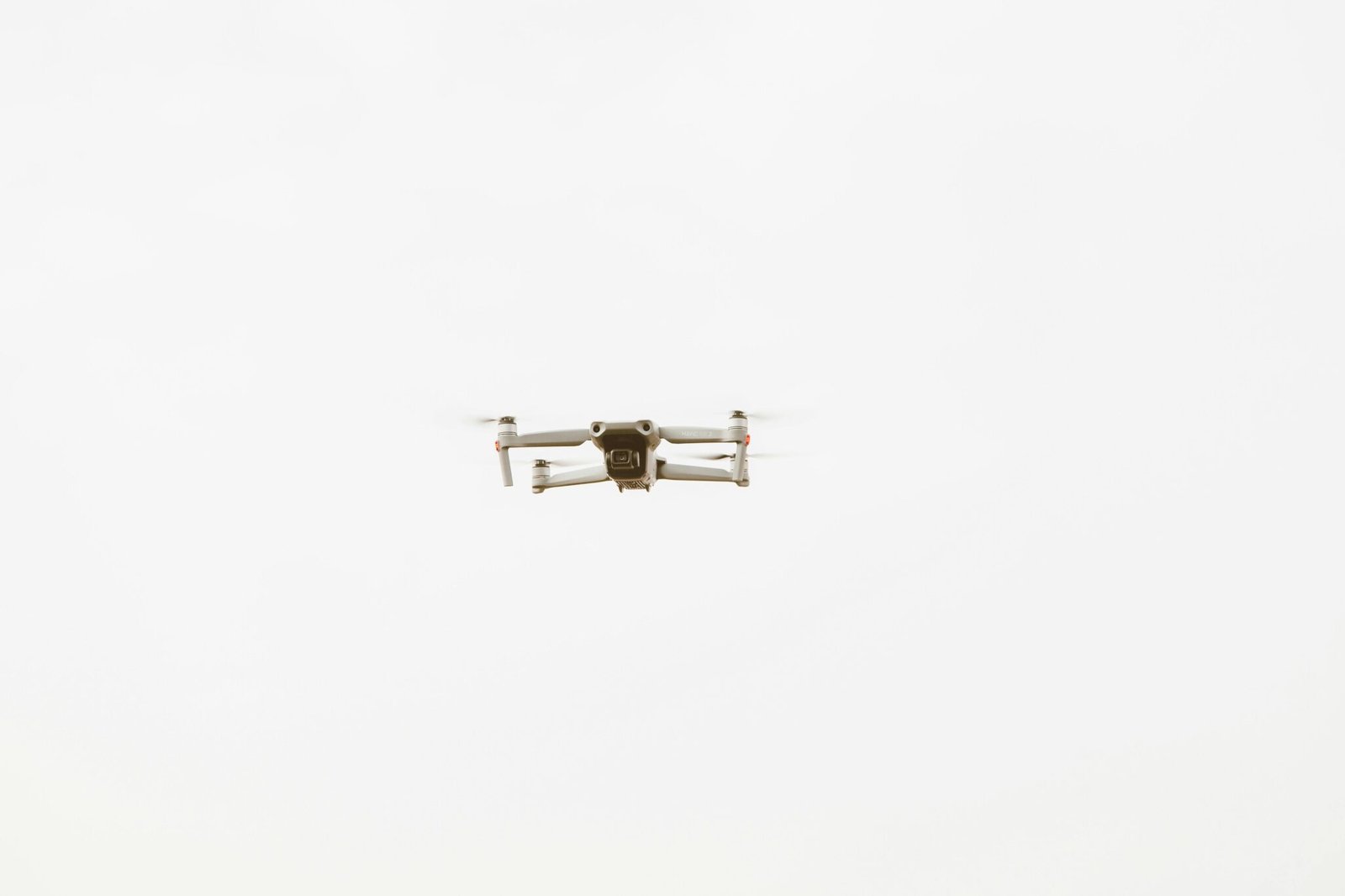




A new family of drone cameras is hitting the market, promising tighter navigation, sharper inspections, and more reliable autonomous flight. FRAMOS has introduced three specialized UAV camera modules that rely on Sony image sensors to deliver high precision, speed, and energy efficiency across demanding vision tasks. These UAV camera modules are preset for navigation, FPV control, industrial inspection, mapping, and security use cases, and they are designed to slide into a wide range of drone platforms with minimal integration effort.
Recent Trends
- Modular UAV camera solutions speed up platform integration
- Global shutter sensors reduce motion blur in flight
- VSLAM and autonomous navigation gain from high-quality imaging
According to RoboticsTomorrow, FRAMOS unveiled the trio at a Munich event on October 21, 2025. The three modules share Sony’s IMX900 global shutter sensor technology and use the PixelMate interface (MIPI CSI-2), with near-infrared sensitivity to support low-light imaging. These UAV camera modules are designed to be plug-and-play components that unlock advanced vision capabilities across a broad range of drones.
FRAMOS Introduces UAV Camera Modules for Drones
Module lineup and capabilities
The FSM:UAV-FPV is built for immersive first-person view control. It uses the Sony IMX900 global shutter sensor and offers a wide 103-degree horizontal field of view, enabling real-time video with minimal rolling shutter artefacts and sharper situational awareness for pilots. These UAV camera modules deliver clear, artifact-free feedback that improves control in dynamic flight scenarios.
The FSM:UAV-NAV targets autonomous navigation. Also leveraging the IMX900, it presents a 76-degree horizontal field of view and is tuned for VSLAM, delivering distortion-free imagery essential for reliable mapping and flight control in fast-moving or low-light conditions. This is where high-quality UAV camera modules become a backbone for autonomous decision making.
The FSM:UAV-PAY is a payload camera module focused on high-resolution inspection and mapping. With a 100-degree horizontal field of view, it provides precise 4K imagery for agriculture, security inspections, and long-range survey tasks. For drone operators, this means clearer data capture over extended ranges without sacrificing performance.
All three modules support the PixelMate – a MIPI CSI-2 based interface – and share near-infrared sensitivity to extend utility into dusk and dawn operations. These UAV camera modules are designed to work with a range of flight stacks and offer a relatively predictable path to integration for developers and OEMs alike.
“With our new drone camera modules, we offer customers state-of-the-art technologies tailored to the high demands of aerial image processing,” says Ugur Kilic, Director of Market Strategy and Business Development at FRAMOS. “Our comprehensive solutions help developers quickly bring market-ready products to market while opening up new application possibilities.”
FRAMOS supplements hardware with ISP tuning, thermal stress management, optical focusing, open-source reference designs, and customized consulting solutions. This ecosystem helps UAV makers shorten development cycles, reduce integration risk, and accelerate time-to-market for vision-first drone products. The company is positioning itself as a reliable partner for forward-looking UAV vision systems in civil and commercial sectors.
For drone developers and operators, the takeaway is clear: modular UAV camera modules are becoming a baseline asset for next-generation flight, sensing, and inspection workflows. This shift accelerates product cycles and expands what is possible in both commercial and civil drone missions. The emphasis on standardized interfaces and high-quality sensors signals a broader move toward interchangeable imaging cores that can be swapped as needs evolve.
Conclusion
FRAMOS’s three-camera family marks an important step in standardizing high-performance imaging for UAVs. By combining Sony sensors with modular interfaces and targeted capabilities, the company lowers barriers to deploying advanced visual systems across a broad range of drones, from compact FPV platforms to larger inspection fleets. As drone operations scale and diversify, such camera modules could become a common core in the next generation of unmanned aircraft.

















