
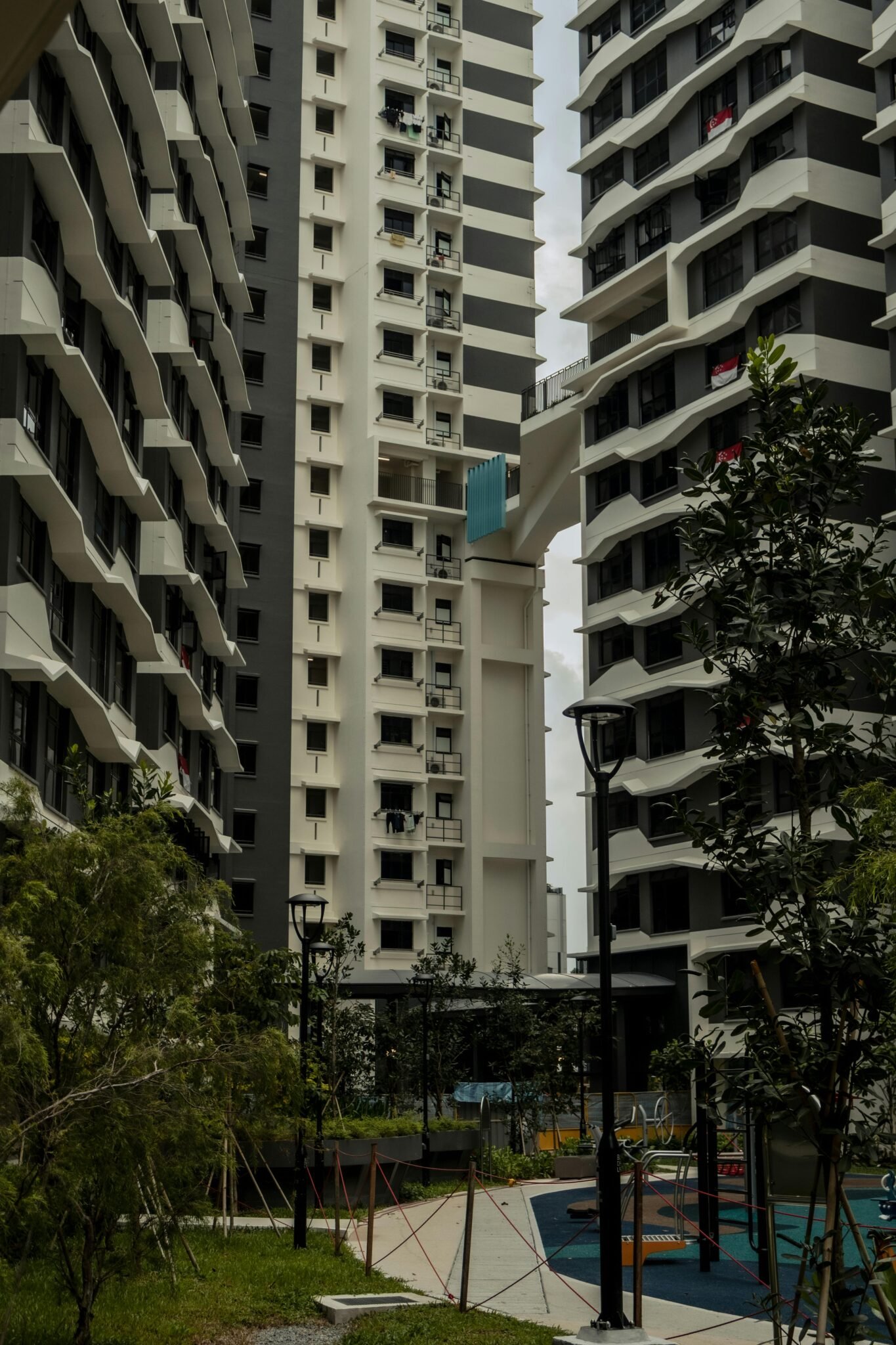




On a bright morning in Singapore, a drone glides along the ledges of a Punggol HDB block, part of a field test that could reshape urban maintenance for tall buildings.
Recent Trends
- Urban maintenance drones expand in Asia with ledge cleaning trials
- Regulatory pilots widen for safe urban drone work
- Drones offer safer, cost-effective options for high-rise upkeep
Drone Ledge Cleaning Trials in Punggol HDB
The test centers on drone ledge cleaning, a technique that uses a compact quadcopter with brush attachments and a controlled spray to reach narrow exterior ledges. The goal is to remove grime, algae, and mineral deposits that accumulate in exposed urban surfaces, tasks traditionally done by rope-access teams. By combining precision control with gentle cleaning media, the setup seeks to minimize risk while delivering consistent results on high-rise blocks.
City housing authorities frame the pilot as a proof-of-concept for safer, faster maintenance that minimizes disruption to residents. The test, conducted near Punggol town, evaluates how the drone performs in cleaning work, how much time it saves compared with rope-access crews, and how well the equipment handles common urban obstacles such as window arrays and protruding ledges. The exercises also test battery life, water usage, and the durability of brush attachments under city weather conditions.
According to Mothership, the project is coordinated by Singapore’s Housing & Development Board (HDB) alongside tech partners, with data collection focusing on safety incidents, cleaning effectiveness, and overall lifecycle costs. The article notes that such pilots are part of a broader push to automate routine maintenance in dense urban skylines. For readers, the point is clear: if this approach proves reliable, it could become a normal part of high-rise upkeep rather than a special case for select blocks.
Industry observers say there is strong interest in scaling this beyond Punggol, especially as labor shortages press building managers to find efficient alternatives. A successful run could lead to broader deployments on other HDB estates and potentially private towers that share similar exterior challenges. The emphasis is not on flashy tech alone but on reliable, repeatable results: cleaner ledges, fewer worker injuries, and predictable schedules. This is the kind of practical automation that can change the daily operations of property management.
Safety, privacy, and regulatory questions naturally follow such pilots. Singaporean regulators and building authorities have historically moved cautiously on urban drone work, emphasizing line-of-sight operations, geofencing, and supervised flights. In practice, this means pilots would begin with restricted areas and gradually expand as data supports safe, traceable operations. For facilities managers, the message is practical: automation can shoulder routine maintenance tasks, freeing skilled workers for higher-value activities and responding faster to visible grime in high-traffic areas.
For readers new to the topic, think of drone ledge cleaning as a modern equivalent of a routine exterior wash, but with sensors and AI that help the device avoid obstacles and optimize cleaning paths. The approach can combine water, detergents, and brushes in a compact package, while water recycling and filtration help limit waste and runoff. In dense cities, where space is tight and access is restricted, these robots represent a scalable option to keep buildings presentable without lane-blocking rope work.
These early trials are also a test bed for data-driven maintenance. Data collected from sensors, cameras, and force measurements helps operators compare results against traditional methods and build a cost-benefit case for broader adoption. If the numbers add up, property managers and developers may begin budgeting for periodic drone ledge cleaning as a standard part of building upkeep, not an exception. The Punggol pilot thus functions as a crucial real-world benchmark for what urban drones can achieve when safety, cost, and reliability converge.
Conclusion
In short, the Punggol drone ledge cleaning pilot signals a shift toward safer, smarter maintenance for urban skylines. If pilots prove scalable, expect more building owners to explore automation to cut risk and cost while improving cleanliness. For cities seeking to balance safety with efficiency, this trend is likely to accelerate in the coming years.

















