
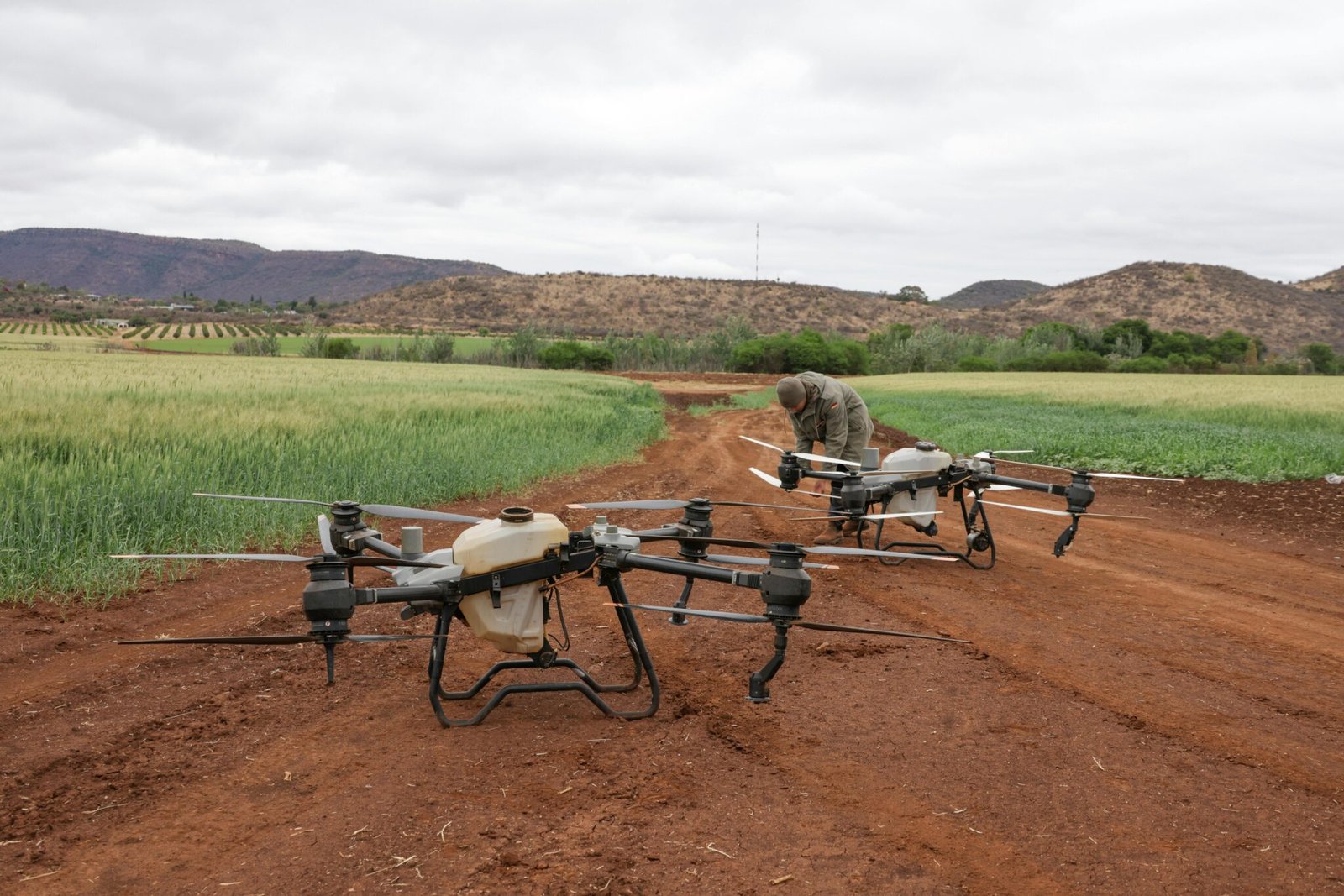




When two drones hover inches apart above a test rig, passing tools between them feels like cooperative robotics in action. This scene signals the potential shift from solo missions to coordinated aerial work. The FlyingToolbox system pairs a lower toolbox drone with a robotic upper manipulator, enabling mid-air tool exchanges that look almost surgical.
Recent Trends
- Cooperative drones become a practical reality
- Magnetic docking tech matures for aerial tasks
- Indoor tests move toward outdoor deployment
How FlyingToolbox Works
FlyingToolbox uses a lower toolbox drone carrying multiple tools and an upper manipulator drone with a robotic arm. When aligned, a magnetic docking connector locks the tools in place, while elastic cords cushion small misalignments. Real-time airflow prediction helps the lower drone compensate for downwash, the powerful downward air from propellers that can exceed 13 meters per second.
Alignment is aided by onboard visual tracking and QR code markers that guide the two drones to sub-centimeter precision even in turbulent air. In tests, the team achieved an average docking accuracy of under 1 centimeter and completed 20 consecutive dockings, including under stronger airflows. This multi-stage exchange also demonstrates how several drones can swap tools while hovering close together, enabling more complex sequences.
Key mechanisms
The docking system centers on a cavity in the manipulator drone’s arm that accepts a tool, paired with conical magnetic connectors on the toolbox drone. Elastic cords help absorb tiny misalignments during the lock. Collectively, this setup improves precision compared with prior aerial docking solutions, which typically hovered in the six to eight centimeter range.
Beyond hardware, the FlyingToolbox concept foreshadows a future where drones form a coordinated aerial workforce. The ability to share tools and split labor could unlock missions in disaster zones, high-rise maintenance, and industrial inspections where human access is dangerous or impractical.
According to Interesting Engineering, the work is reported in Nature, signaling a peer-reviewed validation of the approach.
Industry outlook
In the broader market, FlyingToolbox aligns with a trend toward cooperative drones that can operate as a team. The research invites regulators and insurers to consider new safety standards as aerial work becomes more capable. The path to outdoor deployment remains real, with the team planning to adapt the system to outdoor wind and weather and to develop arms with more degrees of freedom and better perception systems.
Frequently asked questions
- What is FlyingToolbox?
- A system that enables tool exchange between two drones mid-air using a toolbox drone and a manipulator drone.
- What are the current limits?
- Testing has been indoors; outdoor wind and weather pose new challenges. The team aims to expand degrees of freedom and perception for more complex tasks.
Conclusion
The FlyingToolbox work marks a clear step toward cooperative aerial labor. If scaled, it could redefine how maintenance, inspection, and disaster response are carried out from the air. The shift from solo to coordinated drone teams points to a future where aerial work is safer, faster, and capable of tackling jobs that were previously off limits.

















