
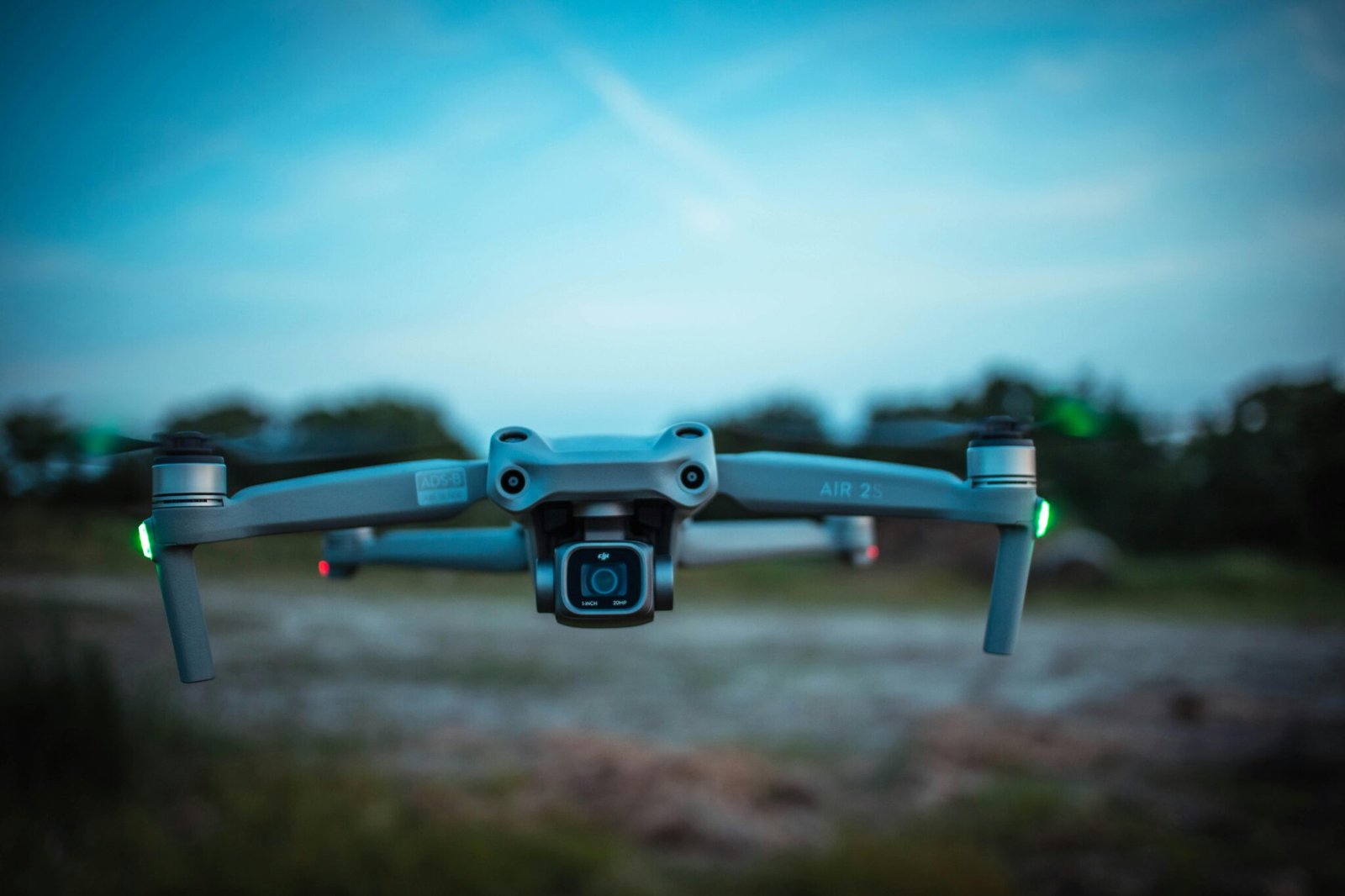




From rooftop surveys to industrial sites, drones are crossing into a new era where software guides flight as much as hardware. This is today’s drone news briefing, summarizing the most relevant developments across the sector. this week an interesting development is the rapid maturation of AI copilots in commercial drones, enabling safer autonomous inspections and more reliable data capture. For operators, that means fewer manual inputs during complex missions and more consistent data quality across varying conditions.
This article explores how the latest drone technology trends are reshaping workflows, safety expectations, and business models across civil, industrial, and research markets.
Recent Trends
- AI copilots improve safety and efficiency
- Urban drone traffic management expands
- Battery breakthroughs extend survey and inspection missions
AI-driven perception is moving from novelty to standard. Modern enterprise platforms integrate on-board perception modules that fuse LiDAR, stereo vision, and deep learning to identify obstacles, weather changes, and dynamic objects in real time. In short, drone technology trends are turning from reactive to anticipatory. This shift lowers risk during critical tasks such as bridge inspections, power-line surveys, and wildfire mapping. When a pilot can rely on an autonomous drone to select a safe flight path and adjust payload parameters on the fly, human operators can focus on interpretation and decision making rather than micromanagement. This is a core driver of the ongoing push toward autonomous flight in commercial sectors.
Today’s deployments span several verticals. In infrastructure inspection, autonomous platforms equipped with AI perception systems can pre-scan assets, flag anomalies, and create actionable reports without constant ground control input. In agriculture, AI-enabled drones monitor crop health and deliver precise treatments, reducing chemical use and boosting yields. In logistics, the combination of AI perception with route optimization promises to shrink delivery times while ensuring compliance with local flight rules. These developments illustrate how drone technology trends are broadening the value proposition beyond pilot-based operations.
AI copilots sharpen on-board decision making
In practice, the AI copilots embedded in today’s drones continuously interpret sensor data, forecast potential conflicts, and adapt flight plans in real time. The effect is a more resilient system that can handle gusts, partial GPS outages, or sudden obstacles without collapsing into manual control. For enterprise users, this translates to fewer aborts, higher coverage, and more dependable data capture for critical tasks like wind turbine inspections or oil-and-gas site surveys. The trend also lowers the bar for new entrants: smaller teams can achieve professional results with less expensive hardware, provided they have access to robust AI-perception stacks and cloud-to-edge data pipelines.
Urban corridors and safety standards evolve
Urban environments pose unique challenges for drone operations, including crowd safety, privacy concerns, and airspace management. Regulators are responding with incremental updates to remote ID requirements, geofencing accuracy standards, and proof-of-concept UTM (unmanned traffic management) pilots. The result is a safer, more scalable blueprint for expanding urban drone traffic while protecting people on the ground. As these regulatory updates unfold, operators can plan longer, more complex urban missions with greater confidence that the mission profile will stay within approved boundaries. This is where regulatory updates become a strategic enabler of growth rather than a hurdle to adoption.
For operators, the evolving policy landscape matters as much as the technology itself. A clear, predictable regulatory framework accelerates procurement, training, and risk assessment. It also spurs investment in compliance tools, data governance, and cyber-resilience—elements that increasingly define the true cost of doing business with drones. In short, the current wave of drone technology trends is not just about smarter hardware. It’s about safer, more auditable operations that scale from pilot projects into daily workflows.
Looking ahead, the convergence of AI perception, autonomous flight, and regulatory maturity will push the market toward standardized data formats, interoperable platforms, and cross-border aerial capabilities. Airlines, construction firms, oil majors, and logistics companies are all eyeing the same inflection point: drones that can operate reliably in complex environments with minimal manual oversight. This is not a distant dream. It is today’s reality, as demonstrated by ongoing trials and early commercial rollouts. For defense planners, the message is clear: the civilian sector’s push toward autonomous, AI-enabled drones signals both a supply chain discipline and a risk profile the wider ecosystem will need to absorb.
In sum, the latest round of drone technology trends shows AI copilots and perception engines maturing from pilots’ assistants into mission-critical partners. The enormous potential lies in combining reliable autonomy with safe, scalable airspace use. As more operators adopt these tools, expect faster data-to-insight cycles, reduced operational risk, and a broader set of use cases—from construction site mapping to urgent disaster response. The trajectory is unmistakable: drones are becoming smarter, safer, and more essential in daily industrial life.
Readers should take away that the pace of change is accelerating, and the policy and technology cycles are compounding. If you’re in operations, consider piloting AI-enabled autonomy in controlled environments first, then expand to more demanding workflows as your data governance and safety practices mature. This week’s developments underscore a broader trend: the drone industry is entering a phase where software and regulation unlock hardware potential, delivering measurable value across sectors.
Conclusion
Today’s drone news highlights a clear arc: AI perception and autonomous flight are becoming core capabilities, urban railings of safety and regulation are hardening, and new business models are emerging around data and service-based offerings. These shifts matter because they reduce risk, improve data quality, and widen the set of practical uses for drones in daily operations. The takeaway is simple: invest in AI-enabled autonomy, align with evolving regulatory frameworks, and design workflows that leverage real-time data to drive decisions. The next wave will see broader deployment, more standardized platforms, and a broader set of industries adopting drone technology trends as a core element of their digital transformation strategy.

















