
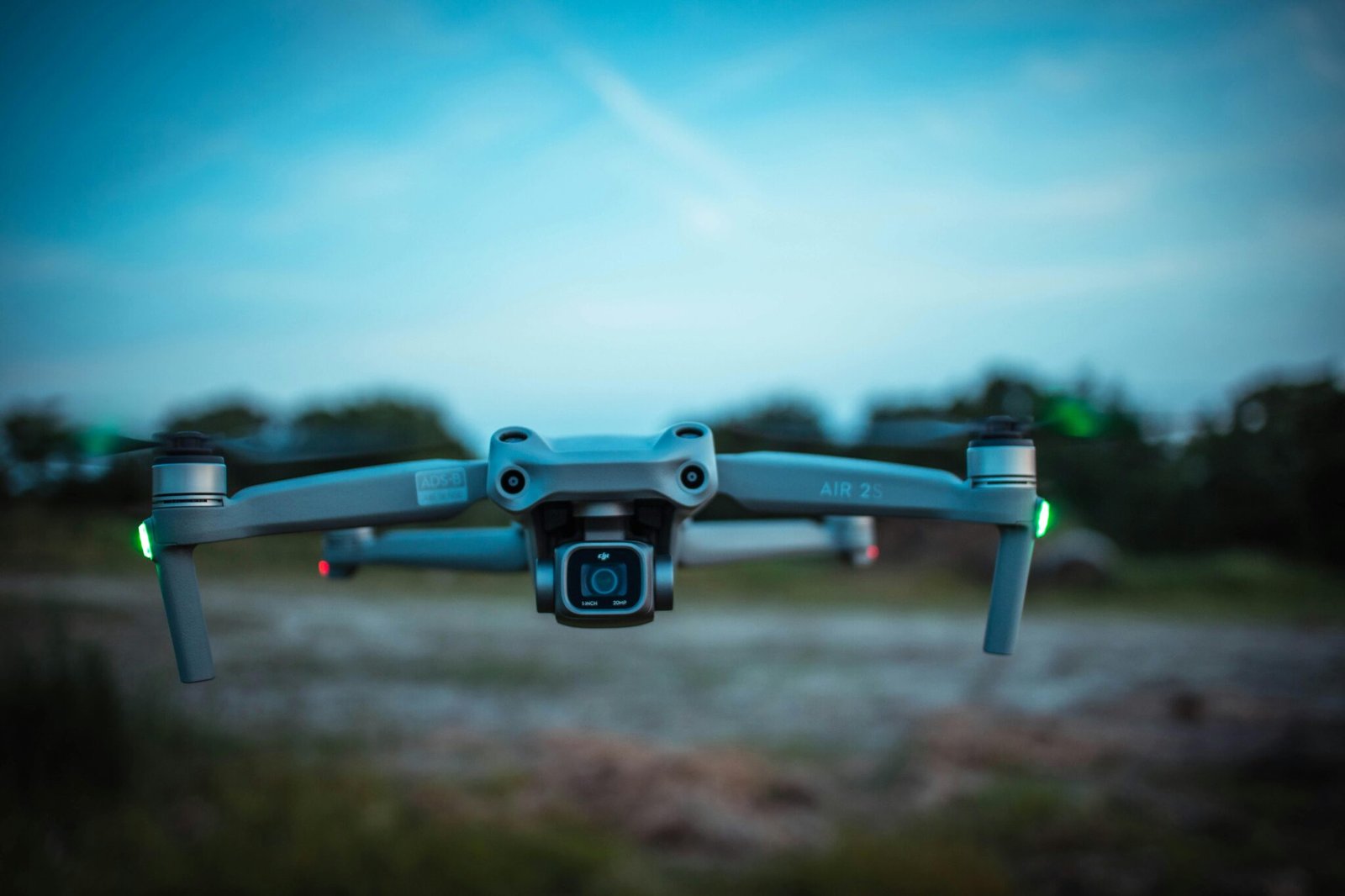




A city skyline glowed with the soft hum of drones moving in synchronized patterns. In today’s daily briefing on drones, the focus is not just the hardware that lifts payloads but the software that guides it. This week an interesting development is the rapid maturation of drone autonomy in real-world operations, where artificial intelligence is increasingly steering flight paths, obstacle avoidance, and decision-making in dynamic environments. The shift is tangible: fleets once tethered to pilot oversight can now perform routine tasks with minimal human input, freeing operators to handle more complex missions.
Recent Trends
- AI-driven piloting moves from labs to real-world ops
- BVLOS waivers expand for commercial drone services
- Edge computing on drones cuts latency and boosts autonomy
The backbone of this transformation is a blend of advanced perception, onboard compute, and robust safety protocols. Modern drones fuse camera data, LiDAR, radar, and sensor fusion to create a reliable picture of the world in real time. That picture feeds an onboard AI stack, enabling what industry players call drone autonomy: the system can chart efficient routes, adjust to sudden gusts, identify landing zones, and even detect restricted airspace. For readers new to the jargon, autonomy here means decisions are made on the drone itself, with human input reserved for exceptions or high-stakes operations. This is not science fiction; it is becoming standard in delivery, inspection, and surveying missions.
Among the most visible proof points are the large fleet trials in urban and semi-urban settings. Companies like Zipline and Wing have demonstrated how autonomous flight can support medical logistics and last-mile delivery with improved reliability. In parallel, inspection specialists use autonomous drones to scan infrastructure assets—bridges, wind turbines, power lines—without constant remote control. The practical impact is clear: faster throughput, less operator fatigue, and safer operations in hazardous or hard-to-reach environments. As one industry veteran puts it, drone autonomy is less about replacing humans and more about enabling humans to scale their reach without sacrificing precision or safety.
To sustain this momentum, regulators are aligning with technical progress. In North America and Europe, authorities are expanding safe corridors for BVLOS (beyond visual line of sight) operations, while mandating rigorous risk assessments and testing regimes. The net effect is a more predictable but still careful expansion of autonomous missions. For field teams, this means fewer pilots needed on each shift and more coverage per day. Yet the emphasis on airspace safety is not softening. Autonomous systems must demonstrate reliable detect-and-avoid capabilities, secure communications, and robust failsafes. In practice, this translates to higher certification bars and more transparent performance metrics, which investors and operators alike are watching closely.
What It Means for Drones Now
The immediate beneficiaries are time-sensitive services: medical deliveries, urgent inspections after storms, and critical data collection during disaster response. In those contexts, drone autonomy acts like a capex multiplier: fleets can complete more tasks with the same number of operators, and the marginal cost of each mission trends downward as AI pilots optimize routes and energy use. For developers and hardware makers, this creates a virtuous loop: better perception and processing enable smarter autonomy, which then justifies more investment into compute-on-board capabilities and power efficiency. The result is a more resilient drone economy that can operate in less-controlled spaces with tighter safety controls.
Industry Implications and Practical Guidance
For operators, the headline is clear: invest in onboard compute—edge computing is no longer a luxury but a necessity. Drones that carry compact AI accelerators can run complex models in real time, reducing dependence on cloud uplinks and improving performance during BVLOS missions. For policy makers, the trend underscores the need for standardized risk assessment frameworks and interoperable data standards so autonomous flights can be scaled safely across operators and borders. And for end users, the payoff is speed and reliability: fewer delays, more predictable service windows, and enhanced safety with automated detect-and-avoid and geofencing that is robust yet flexible when required by mission needs.
In practice, a typical autonomous workflow might look like this: a dispatch center assigns a mission; the drone preloads the route and safety plan, then uses edge computing to monitor wind, traffic, and battery health in real time. If a waypoint becomes unsafe, the system recalculates a safe alternative and continues without manual intervention. If communication drops, a pre-programmed fallback initiates a return-to-home or landing sequence. This kind of resilience is what turns drone autonomy from a novelty into a core capability for daily operations across civil, commercial, and humanitarian sectors.
Conclusion
The week’s developments signal a clear trajectory: drone autonomy is moving from pilot-assisted to pilot-augmented and, increasingly, pilot-free for routine tasks. AI-driven piloting, edge computing, and smarter perception are enabling safer, more reliable autonomous flights in real-world conditions. Regulators are responding with clearer BVLOS pathways and safer airspace protocols, which helps unlock scalable operations across industries such as delivery, inspection, and emergency response. For stakeholders, the takeaway is straightforward: invest now in onboard AI and robust safety frameworks, because the demand for fast, dependable drone services will only rise. As the technology matures, the edge will move from experimental pilots to everyday practice, reshaping how organizations plan, execute, and measure aerial missions in a world that expects more from every flight.

















