
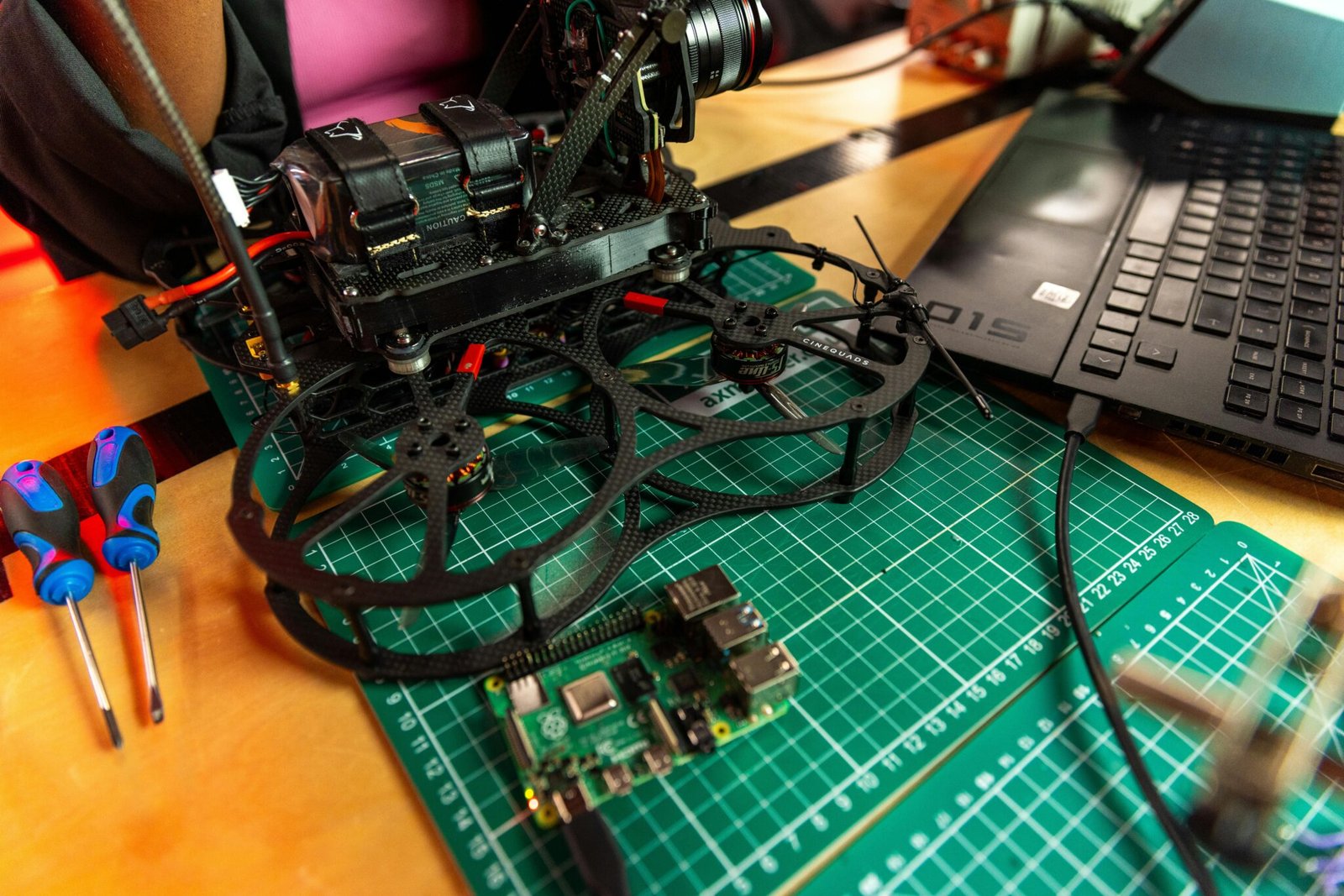




In a cramped workshop, two DIY engineers strapped a compact quad to a test rig and asked physics to prove them right. The Peregreen 3, a 3D-printed drone, surged into new territory in a controlled run, hitting 585 km/h (363.5 mph).
Recent Trends
- DIY high-speed drone experiments are accelerating
- Thermal management becomes critical at peak power
- 3D printing enables rapid iteration for extreme-performance drones
The Peregreen 3 marks a leap in power for a DIY, 3D-printed drone project. Peak power draw reaches 16.2 kilowatts, nearly double Peregreen 2’s 8.9 kW and more than triple the original drone’s 5.2 kW. The power comes from a battery capable of delivering that burst, roughly 16 kilowatts, which makes the craft surprisingly heavy at 2.77 kilograms (6.1 pounds) versus 1.85 kg (4.1 pounds) for Peregreen 2.
To translate brute force into speed without cooking the hardware, the team redesigned the propellers and airflow. They built custom APC blades with extreme pitch to keep blade tips from reaching sonic levels. After early tests used a carbon-fiber frame with balance and GPS issues, they moved to a fully 3D-printed drone body. An initial air-cooled prototype caught fire; the designers responded with a compact 50 milliliter water cooling chamber, which outperformed air cooling and allowed the removal of vents that added drag.
With refinements complete, the Peregreen 3 achieved 585 km/h in flight tests, a speed that dwarfs most commercial drones. Endurance, however, is a trade-off: at full throttle the battery lasts about 23 seconds, and typical flights run around 110 seconds with 20% charge remaining. Notebookcheck notes that Guinness World Records has not yet validated the claim, but given the team’s track record, recognition could follow.
Mike Bell and his son Luke Bell personify a blend of hands-on tinkering and serious hardware experiments. Their approach—shifting from carbon fiber to a 3D-printed frame, integrating GPS directly with the camera module, and implementing a compact water-cooling loop—offers a potential blueprint for others pursuing extreme-performance drones outside traditional R&D labs. This is not a consumer toy; it’s a high-risk, high-reward testbed that yields lessons on power management, stability under extreme loads, and new cooling architectures that could inform larger, commercially viable systems.
What makes this possible
- Very high power in a lightweight frame
- Extreme propeller pitch and custom blades
- Liquid cooling to tame heat and reduce drag
Implications for racing and research
Extreme-speed drones like the Peregreen 3 act as living labs, testing powertrain limits and thermal management under pressure. For racing, they push teams to rethink materials, aerodynamics, and safety systems. For research, they can accelerate studies in battery chemistry, cooling fluids, and control algorithms under high dynamic conditions.
Regulatory and safety context
Right now, such feats fall outside standard commercial drone operations. Regulators in Europe and North America focus on safety and airspace integration, so extreme-speed demonstrations require controlled environments and approvals. The lack of Guinness validation reminds readers that world records in drone speed still rely on verification processes and independent tests.
For readers, the takeaway is clear: extreme speed demands smarter cooling, robust testing, and careful risk management.
Conclusion
The Peregreen 3 showcases what’s possible when DIY engineering meets high-performance propulsion. It highlights a path where rapid prototyping, advanced cooling, and deliberate design choices unlock unprecedented speeds while revealing the trade-offs like short endurance. As drone teams push into higher power envelopes, expect more cross-pollination between hobbyist labs, university programs, and industry R&D—driving new materials, smarter control, and safer, scalable high-speed platforms.

















