




Drone City and Space City: Andhra Pradesh’s Tech Leap
Tech skies are heating up in Andhra Pradesh as the state unveils India’s first Drone City and Twin Space Cities, signaling a bold bet on drones, satellites, and quantum tech. The plan envisions a self-contained ecosystem that brings together design, manufacturing, testing, and research under one roof to accelerate adoption across civil and commercial markets.
Recent Trends
- Drone ecosystems expand with state-led city projects
- Private and public funding accelerates space tech incubators
- Quantum computing hubs emerge alongside aerospace initiatives
In the core plan, the Drone City will span about 300 acres in Orvakal, Kurnool district. It is designed as an integrated international hub for drone research and manufacturing, featuring parks for drone design, fabrication facilities, and dedicated spaces for testing and certification. A standout ambition is to build a robust workforce—targeting around 25,000 trained remote pilots—while offering strong investor incentives such as a 20% capital subsidy and full SGST reimbursement. The state also plans at least 50 Centres of Excellence across its territory to foster applied research, talent development, and entrepreneurship. These features reflect a practical view that modern drone supply chains require not just hardware, but a learning and certification ladder that sustains long-term growth. The scale of this initiative signals a serious attempt to convert drone capabilities into regional economic activity, with implications for logistics, inspection, and public safety across the state.
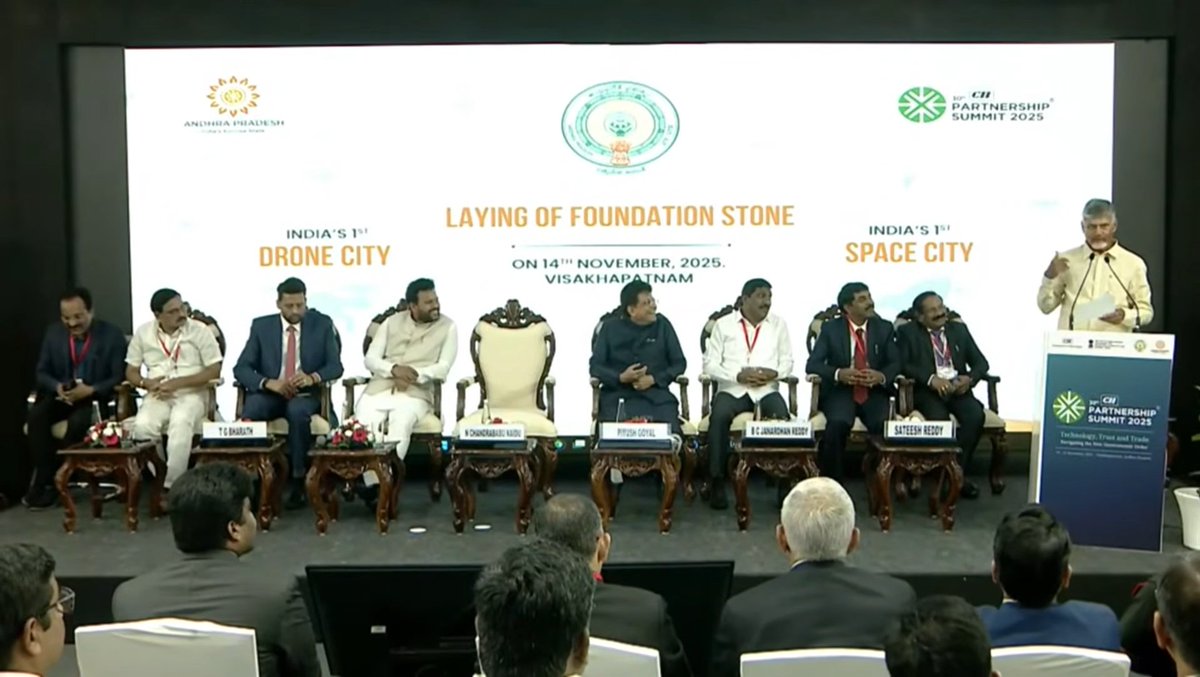
According to The CSR Journal, the ceremony to launch the projects took place in a virtual unveiling by Chief Minister N. Chandrababu Naidu and Union Commerce Minister Piyush Goyal at the 30th CII Partnership Summit held in Visakhapatnam. The emphasis was clear: attract private capital, international expertise, and a broad ecosystem that can translate futuristic tech into real jobs and revenue.
Beyond drones, Andhra Pradesh is betting on a parallel Space City strategy. The two Twin Space Cities—located in Sri Sathya Sai and Tirupati districts—are pitched as incubators for space-tech startups, satellite component manufacturing, prototype development, and launch logistics support. The government projects investments of about ₹25,000 crore and anticipates creating tens of thousands of jobs as the private sector participates in space hardware, software, and services. The ambition is not merely to assemble components; it is to establish end-to-end supply chains that can compete with established hubs globally while spurring local capability in testing, integration, and mission planning.
On the jobs and investment front, the state’s plan points to a transformative impact. The Drone City ecosystem is expected to generate more than 40,000 direct and indirect jobs, spanning engineers, technicians, and operators who will feed a growing demand for aerial data, delivery pilots, and industrial automation. The Space City initiative envisions a similar scale of opportunity, with a focus on high-value roles in design, manufacturing, and mission control. To catalyze this ambition, the government has announced a dedicated SpaceTech Fund of ₹100 crore, alongside R&D grants, stamp-duty waivers, and a network of planned Centres of Excellence to sustain a pipeline of skilled talent and entrepreneurial ventures.
Policy momentum underpins the broader push. The Andhra Pradesh Space Policy 4.0 (2025–2030) is framed to spur private sector participation in satellite technology, complementing the drone ecosystem with a holistic technology platform. The government also links the effort to larger national development trajectories such as Swarna Andhra 2047 and Viksit Bharat 2047, signaling alignment with central ambitions while pursuing regional leadership in aerospace and space tech. The approach combines physical infrastructure with ecosystem-level interventions—ensuring that start-ups have access to testing facilities, research collaborators, and a clear path to market.
Partnerships are a critical lever. For Space Cities, the government has already lined up collaborations with Blue Space and Eternal Exploration Guild, while Drone City will benefit from ties with Algobotics, Akin Analytics Solution, Senselmage, and Airpace Industries. These alliances bring global best practices, proven manufacturing methods, and access to international networks that can shorten time-to-market for new drones and space components. Union Commerce Minister Piyush Goyal has praised the leadership and vision behind the initiative, positioning Andhra Pradesh at the frontier of India’s technology revolution.
Another bold element is the Quantum Valley project in Amaravati, slated to begin operations by January 2026. Developed in collaboration with IBM, TCS, L&T, and LTIMindtree, Quantum Valley aims to provide access to advanced quantum computing capabilities, with the potential to accelerate AI, optimization, and materials research in tandem with aerospace and drone programs. If successful, this quadrology of drone, space, quantum, and green hydrogen capabilities could redefine what a state can offer to both industry and government programs—creating a first-of-its-kind local ecosystem that drives exports and attracts world-class talent.
Of course, turning these plans into practical outcomes will require navigating policy, regulation, and capacity-building challenges. Workforce training, risk management for testing, export controls, and coordination with national space and aviation authorities will shape how quickly this vision materializes. Yet the fundamentals are clear: Andhra Pradesh is choosing to invest in a future where unmanned systems, space hardware, and quantum-enabled computing are co-located with manufacturing, research, and education. For industry players, the message is unmistakable: the state offers a large, government-backed platform designed to attract capital and talent, while tying into India’s broader push toward self-reliant tech ecosystems.
FAQ
- What is the core aim of Drone City? To create a comprehensive drone hub with design, manufacturing, testing, and training, supported by subsidies and a broad skills program.
- What role does Space City play? To incubate space-tech startups, manufacture satellite components, and manage launch logistics within a robust private-public ecosystem.
Conclusion
The Andhra Pradesh plan signals a strategic shift in how states can build high-tech economic engines. By combining drone and space ecosystems with quantum computing ambitions, the state is attempting to accelerate job creation, attract global capital, and catalyze a broader technology corridor that could influence policy and investment across India. If it delivers on the promised centers of excellence, incentives, and partnerships, Andhra Pradesh could become a live case study in how to scale advanced technologies from the ground up.

















