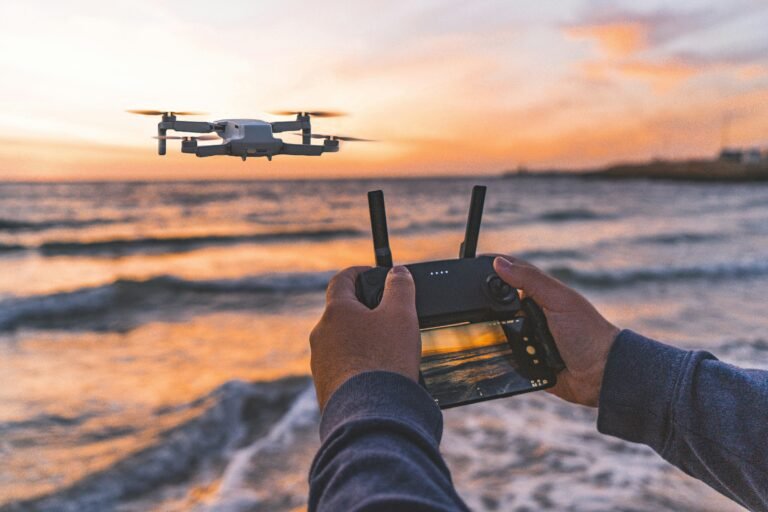



In Visakhapatnam, a bold mobility plan is beginning to take shape. The state is framing a vision to export flying cars and drone taxis within two years, signaling a serious bet on urban air mobility. Local manufacturers have started to respond, with JK Maini Global Aerospace and the Raymond Group’s Maini unit indicating readiness to supply core components for flying cars. The push hinges on a favorable policy environment from both state and central governments.
Recent Trends
- Urban air mobility policy begins to take shape
- State-backed aerospace clusters attract OEMs
- Prototype-to-pilot demos accelerate in India
AP’s Bold Move on Flying Cars and Drone Taxis
At the 30th CII Partnership Summit in Visakhapatnam, Chief Minister N. Chandrababu Naidu outlined the plan to export flying cars and drone taxis from Andhra Pradesh, positioning the state as a potential manufacturing hub for next‑gen urban mobility. The announcements have already sparked industry chatter about the readiness of local suppliers. JK Maini Global Aerospace, which has long supplied engineering and aerospace components to OEMs, said it already manufactures the components needed for flying cars and is awaiting the right policy signals to scale up. The company’s leadership notes that policy clarity from both state and central authorities will be a decisive trigger for accelerating investments.
The collaboration narrative grew stronger with a formal MoU between the AP government and Raymond Group subsidiaries, including Maini Group and JK Files, to set up an Aerospace park and manufacturing facility in Anantapur with a projected investment exceeding ₹900 crore. Concurrently, the state government is exploring a broader policy framework to nurture drone manufacturing and has floated plans for a 300‑acre drone city in Orvakallu, Kurnool, aimed at R&D and manufacturing. Such incentives as capital subsidies and SGST waivers are being discussed as levers to attract startups and foreign partners alike.
On the ground, Indian drone startup Magnum Wings has already tested a two-seater prototype and is advancing models geared toward commercial use in India. The founder, Chava Abhiram, has described a two-seater electric model designed for urban traffic that can travel at about 100 km/h with roughly 40 km of range. The aircraft’s altitude ceiling is expected to reach up to 1,000 feet, with work underway to triple the prototype’s capacity.
Gautam Maini, managing director of JK Maini Global Aerospace, told The Hindu that the company is a long-time supplier of engineering and aerospace components to OEMs worldwide and is eager to venture into the advanced aerospace segment. He emphasized that JK Maini currently makes all the necessary components for flying cars and is simply awaiting a supportive policy from both state and central governments to move the manufacturing plan forward. This sentiment mirrors a broader industry view that policy clarity, not just hardware, will define the speed at which urban air mobility becomes a commercial reality.
For readers watching this space, the takeaway is clear: policy clarity and a supportive investment climate are as crucial as the technology itself. If Andhra Pradesh can align funding, land, and regulatory pathways, it could become a focal point for India’s nascent but rapidly evolving urban air mobility ecosystem.
AP’s Export Vision and the Aerospace Cluster
The state’s aerospace park concept and the Anantapur facility are designed to map a full supply chain, from components to final assembly. A large, government-backed manufacturing campus can reduce logistics friction, shorten time-to-market, and attract global OEMs seeking proximity to Indian markets. The collaboration also signals a broader shift in India’s industrial policy toward integrated clusters that fuse defense, civil aviation, and electronics—an approach intended to accelerate high-value manufacturing and job creation.
Implications for Urban Mobility and Indian Industry
Drones and flying cars promise to reshape how people travel within and between cities. In parallel, they push regulators to refine airspace management, safety standards, and operating procedures for low-altitude flights. For Andhra Pradesh and similar states, success will require synchronized efforts across ministries, a pragmatic roadmap for pilots and technicians, and a clear road to scale from prototype testing to commercial routes. The Magnum Wings program illustrates potential timelines: testing prototypes now, scaling toward pilot operations in the near term, and broader rollout as policy enables.
Beyond the aviation angle, the developments have wide ripple effects on manufacturing jobs, supplier networks, and regional competitiveness. If the state can demonstrate cost-effective, quality-driven production and reliable export pathways, other states may follow with similar clusters. In a country where aerospace ambition meets fiscal constraints, the challenge will be to maintain execution momentum while building the safety and regulatory spine that urban air mobility requires.
From a policy standpoint, the emergence of an AP drone city and an expansive aerospace park can serve as a blueprint for other states eager to attract aerospace investment. It also places India squarely in the global conversation about the role of flying cars and drone taxis in future transport networks.
Conclusion
Andhra Pradesh’s push to export flying cars and drone taxis marks a pivotal moment for India’s urban air mobility ambitions. The project combines policy clarity, ambitious investment, and a growing ecosystem of suppliers willing to scale. If the government aligns incentives with rigorous safety standards, we could see a new era where air mobility moves from the drawing board to commercial routes, starting with pilot programs and expanding to city-wide networks. The coming months will reveal how quickly policy, infrastructure, and private capital converge to turn this bold vision into reality.