


Drone airspace security: Fleet Week SF highlights
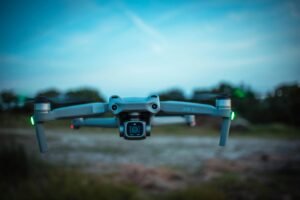
San Francisco’s Fleet Week closed another year with a clear signal: public events can run tighter, safer skies when drone management is embedded in the plan. Airspace, a company at the center of urban airspace security, deployed its SpatialA system to provide real-time situational awareness as drones swarmed the city skies during the event. The approach combines sensors, AI analytics and rapid incident response to keep piloted and unmanned aircraft safely coexisting in dense urban airspace. This year marks Airspace’s sixth consecutive Fleet Week presence, underscoring how drone security has matured from novelty to essential public-safety infrastructure.
Recent Trends
- Real-time urban airspace monitoring expands at events
- Remote ID adoption and standardization accelerates
- Dual-use drone security tech enables public safety and industry growth
Airspace’s SpatialA platform relies on multi-sensor fusion that blends RF signals, radar echoes, and optical data to render a live map of activity in the low-altitude layer. The system classifies drones and flags anomalies within seconds, turning a potentially chaotic airspace into a readable, actionable scene. Operators can distinguish friendly flights from outliers, reducing false alarms and enabling a faster, coordinated response. In crowded urban environments, speed is critical; the system empowers public-safety teams and event organizers to react before a minor incident becomes a major disruption.
According to MENAFN, the event showcased how Airspace’s technology supports both safety and progress by enabling a wide range of drone operations—from inspection and media coverage to emergency response—without compromising public security. The coverage notes that Fleet Week is a unique testbed because urban airspace here can host hundreds of drones daily, including commercial and custom-built systems that fly beyond visual line of sight. The result is a compelling case for scalable, transparent airspace governance in dense cities.
Remote ID technology, invented in San Francisco and widely cited as a de facto standard by regulators, provides a digital identity for every drone. In Fleet Week’s setting, Remote ID weaves into the incident-response workflow, allowing authorities to locate and verify aircraft quickly. This linkage between identity, location, and intent is a powerful antidote to miscommunication or misidentification in a busy sky. By design, Airspace’s platform is dual-use: it protects critical infrastructure and public events while supporting legitimate industrial growth in inspection, logistics, and media production.
During Fleet Week, Airspace conducted live demonstrations of detection and classification workflows. The company showcased real-time airspace monitoring to protect both manned and unmanned aircraft, and hosted briefings for government, defense, and industry partners. A public education kiosk helped visitors understand drone safety, Remote ID, and how drones can support emergency response and public events. For attendees and operators, the experience translated a complex problem into tangible actions that improve safety and continuity of operations.
For defense planners and city officials, the message was unmistakable: urban airspace is evolving faster than most cities can keep up with, and scalable, transparent monitoring is essential to unlock the benefits of drones. Fleet Week’s legacy is more than a single event; it signals a shift toward proactive airspace governance that can handle density, diversity of platforms, and evolving mission sets. The lessons from San Francisco are already informing other municipalities considering similar sensor- and AI-driven approaches to public-safety missions, disaster response, and large-scale gatherings.
Looking ahead, the industry can expect more events to adopt integrated airspace management solutions that combine detection, classification, and automated mitigation. The practical takeaway is clear: as drones become a routine part of city skies, robust airspace security must be embedded in event planning, regulatory alignment, and vendor ecosystems. In this context, Airspace’s Fleet Week performance offers a blueprint for cities aiming to balance innovation with public safety.
Reader note
For readers outside of San Francisco, the Fleet Week example shows what to look for: a security framework that is transparent, standards-based, and capable of rapid adaptation to changing drone capabilities. The trend is not just about technology; it is about governance that keeps pace with the tempo of modern aviation.
Conclusion
Airspace’s sixth Fleet Week in San Francisco demonstrates how drone airspace security is moving from a niche capability to a foundational element of urban operations. By combining sensor fusion, AI analytics, and Remote ID, the system delivers real-time visibility, reduces risk, and supports a broader range of drone-enabled services. As cities grow more confident in integrating drone activity into daily life, the Fleet Week playbook offers a practical path forward for public-safety coordination, event logistics, and industry growth.