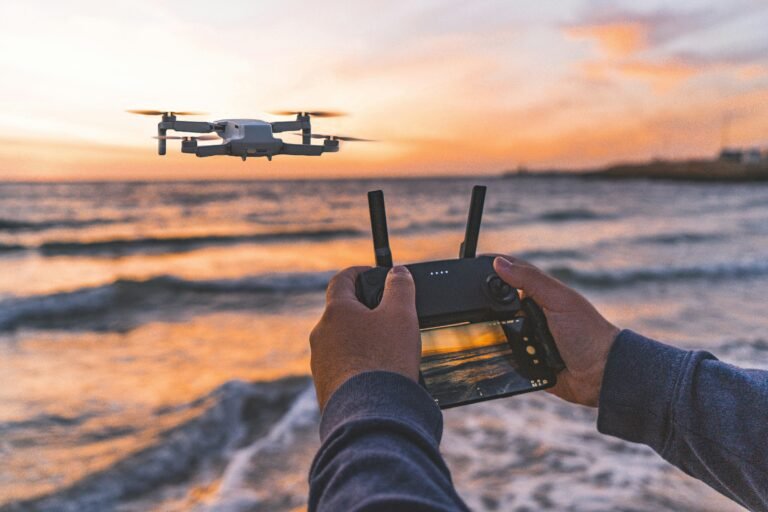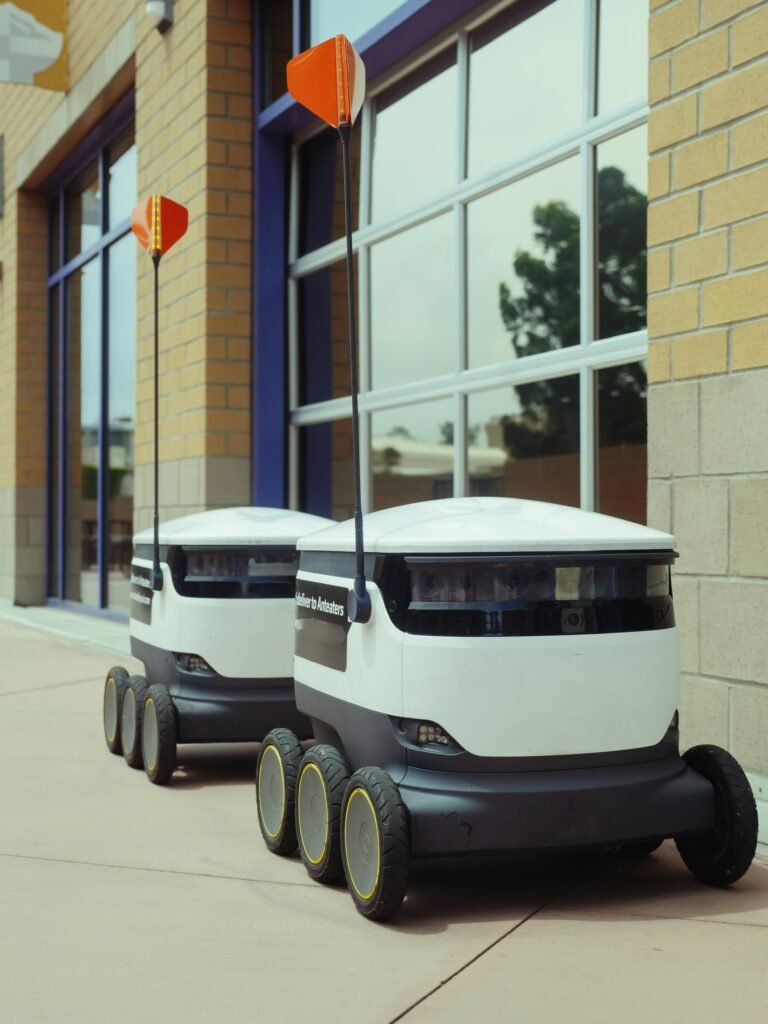



Morning sun glints off a chorus of delivery drones skimming between cranes and rooftop vents at a major logistics park, signaling a new era where AI driven drones handle more of the work. These scenes are no longer rare. Today’s fleets pull data from multispectral cameras, lidar, and weather sensors to decide routes in real time. The drones move with a lightness that makes heavy logistical tasks feel routine, and they are learning to adapt on the fly to shifting wind gusts and crowded airspace. This week an interesting development is that several operators are testing onboard AI for fully autonomous swarms in dense urban corridors, aiming to reduce ground controllers and increase throughput.
Recent Trends
- AI-enabled autonomy expands beyond inspection
- Urban drone corridors gain regulatory attention
- Payload optimization advances with new battery tech
Autonomy and Payloads: Drones as the new moving warehouses
What stands out this week is not just speed but sophistication. AI driven drones are moving from single-delivery pilots to coordinated swarms that can carry multiple small payloads in a single flight. Networks are increasingly using onboard edge AI to negotiate airspace with other craft, pedestrians, and cranes without waiting for a ground station to approve every move. Think of a fleet that can adjust its plan mid-flight when a delivery point shifts due to construction or a temporary no-fly zone. For operators, this shift translates into higher reliability and lower human labor costs, which matters as demand for rapid, contactless delivery grows across sectors from healthcare to e-commerce. A practical example in field tests is the integration of compact, high-efficiency payload bays that minimize drag and free up additional mass for sensors and batteries, enabling longer missions without a fuel stop. In short, AI driven drones are becoming more than tools; they are mobile autonomous platforms capable of decision making on the edge of the network.
Industry players are combining AI perception with robust autonomy stacks to support functions such as on-site inspection, asset tracking, and emergency response. In practice, that means onboard processing chunks that weigh less than a smartphone can decide when to decelerate, reroute, or drop a payload exactly where needed. That capability reduces the need for constant human supervision and accelerates mission cadence, a development many operators are watching closely as they plan for urban tests and regional expansions.
Regulation and Real-World Trials: Crossing the urban threshold
Regulators around the world are quietly updating the rules to accommodate more complex drone operations. The push toward more integrated airspace, with standardized remote identification and better situational awareness, helps safe autonomous flights scale from pilots in open areas to dense city centers. In practice, this translates to more predictable flight paths, better separation from manned aviation, and clearer requirements for data privacy and security. For the drone industry, the regulatory signal is simple: if you want to deploy AI driven drones at scale, you must design for a transparent, auditable, and safe operation that public authorities can monitor in real time. While some regions accelerate approvals for urban delivery pilots, others emphasize privacy and noise mitigation. The trend is clear: policy is catching up with technology, not stalling it.
What This Means for Operators: A roadmap for the coming months
For operators, the headline is opportunity coupled with responsibility. The most practical takeaway is to invest in systems that can survive real-world conditions: resilient onboard AI, reliable edge computing, and robust cyber security to guard against spoofing or tampering with flight data. Operators should also prepare for tighter data governance around imagery and sensor data, especially in urban environments where privacy concerns are heightened. The convergence of edge AI with scalable drone fleets creates a path to serve multiple use cases from a single platform: delivery, inspection, and emergency response. If you are a manager at a logistics firm or a municipal operator, the message is straightforward: start small, prove a safe, compliant model, then scale with clearly defined KPIs for throughput, reliability, and safety. This is a moment where good planning and solid technology choices can compound quickly as demand grows and airspace becomes more crowded.
From a market perspective, the momentum favors those who can pair AI driven drones with practical, real-world workflows. The race is no longer about novelty; it is about predictable performance at scale. Consider how a hospital network might schedule routine medical deliveries across campuses with minimal human oversight, or how an energy company could inspect pipelines with autonomous fleets that react to weather alerts and asset conditions in real time. The operators that succeed will be the ones who combine a strong autonomy stack with a clear adherence to regulatory norms and community impact. As a result, this week’s developments signal not just new capabilities, but a broader shift toward drone-enabled workflows that feel almost invisible to end users, yet are fundamentally transforming daily operations.
For readers following the industry, the trend is unmistakable: AI driven drones are moving from experimental pilots to essential service platforms. The next wave will likely hinge on interoperability across fleets and a standardized ecosystem for data sharing, safety certification, and flight planning. This is the moment to watch for pilots of change who translate clever tech into reliable, scalable services. The field is maturing, and the path to widespread adoption is becoming clearer by the month.
Conclusion
Summary: AI driven drones are advancing autonomous flight, expanding payload capabilities, and accelerating real-world trials in urban airspace. Regulation is gradually aligning with these capabilities, enabling safer, more efficient operations. The takeaway for operators is to prioritize onboard AI reliability, edge processing, and privacy-aware data practices while preparing for broader airspace integration. The future of drone work is here, and the most successful teams will blend technical excellence with strategic planning to turn pilots into scalable, repeatable processes.