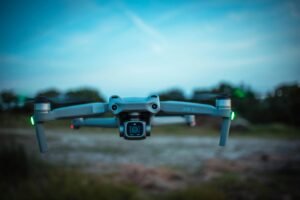



Walmart drone delivery in the real world
The first rule of a real-world drone trial is simple: test it where people live, shop, and expect convenience. In a recent display organized around Walmart’s drone delivery pilot, suburban neighborhoods became a proving ground for a service many retailers hope to scale. The test focuses on delivering small goods directly from a store to customers’ doorsteps, blending logistics practicality with the allure of autonomous tech. For consumers, this is not a sci‑fi scenario; it is a real checkout line moving through the air. And for retailers, it signals a possible path to faster last‑mile fulfillment without adding trucks to the curb.
Recent Trends
- Retailers expanding last-mile drone pilots
- FAA regulations evolving for air delivery
- Public acceptance of autonomous retail delivery
In practical terms, Walmart’s drone delivery test examines how a store can prepare, load, and authorize tiny autonomous aircraft for curb-to-door service. The operation emphasizes a few core questions: how quickly a drone can navigate to a customer’s home, how packages are secured for flight, and how delivery confirmation is handled once the drone lands. The pilot also probes how customers onboard the service—an important step for broad adoption—will react to airborne deliveries over residential neighborhoods. While the drones are compact, the logistic choreography is complex: inventory readiness, pickup routing, weather considerations, and a reliable handoff to the resident.
According to Rockdalenewtoncitizen, the program advances beyond isolated demos by embedding delivery into a retail workflow. The story notes partnerships, pick-up points, and a growing sense that autonomous air shipments could become a cornerstone of omnichannel strategies. Walmart’s plan aligns with a broader industry trend: retailers experimenting with how to blend physical stores, online orders, and autonomous devices into a seamless shopping experience. The pilot also highlights the practical issue of safety and trust in a neighborhood setting, which has large policy implications for regulation and public perception. As the campaign unfolds, observers will watch for metrics such as delivery speed, accuracy, and customer satisfaction to determine if this model can scale.
From a policy and technology perspective, the Walmart drone delivery test surfaces three intertwined themes. First, airspace permission and scheduling become critical as more retailers seek nearby flight corridors for last‑mile work. Second, the technical stack matters: payload limits, flight autonomy, and secure takeoff and landing must work together in real sites, not controlled test arenas. Third, consumer expectations are evolving. People want faster deliveries, but they also require clear communication about where, when, and how the drone arrives. For readers tracking industry progress, this trial is a practical case study in how a major retailer moves from pilots to potentially broader deployments. As a frame of reference, the test resonates with other industry pilots, including Amazon Prime Air and UPS Flight Forward, that are pushing for real‑world viability rather than lab curiosities. The report formats the Walmart initiative as a step rather than a final verdict, underscoring that success hinges on reliability, safety, and perceived value.
For defense planners and logistics managers, the message is unmistakable: autonomous air logistics is not just a tech demo; it is becoming part of how big retailers think about distribution. The Walmart drone delivery pilot illustrates how a retailer can integrate air shipments into existing networks, balancing speed with cost and risk. To ordinary shoppers, the potential is simple: when a product ships by air from the neighborhood store, the path from cart to doorstep shrinks. Yet translating that promise into daily business requires careful attention to runway planning, ground support, and regulatory clarity. If the program proves scalable, expect more pilots that combine local distribution hubs with small, automated aircraft—an orchestration challenge that could redefine the last mile in retail.
Operational takeaways for retailers
First, the proximity advantage matters. The closer a drone can take off to a customer, the faster and cheaper the delivery. Second, parcel security and weather resilience become non‑negotiables as drones operate in real neighborhoods. Third, the customer experience must be simple and transparent. Clear instructions, predictable delivery windows, and reliable handoffs build confidence. In practice, Walmart’s approach points to a future where stores function as micro‑fulfillment centers for both in‑store pickups and air deliveries, expanding the role of the physical footprint in a digital economy. Retail executives watching this space should consider how to align inventory, packaging, and IT systems to support autonomous air logistics at scale.
Tech and policy context
The Walmart drone delivery test sits at the intersection of technology and policy. On the technology side, lightweight sensors, precise GPS, obstacle avoidance, and secure payload handling create a workable envelope for home deliveries. On the policy side, regulators are weighing safety standards and air traffic management needs as more operators seek residential access. Retailers will need to monitor developments in airspace permissions and evolving FAA regulations that govern autonomous flights. These factors matter because they determine how quickly pilots can expand from pilot programs to regular service lines. For readers not steeped in drone policy, think of it as a set of traffic rules for the sky that determine when and where drones can fly safely near homes and schools.
What the test means for shoppers and the industry
For shoppers, the prospect is simple: faster access to everyday items with less drive time. For the industry, the Walmart drone delivery test is a bellwether for the viability of autonomous last‑mile logistics at scale. The outcome will influence how retailers structure micro‑fulfillment, packaging, and delivery orchestration in the next few years. It could also spur more collaborations between retailers, drone operators, and software platforms that manage scheduling, route optimization, and customer notifications. If this model proves reliable, expect a wave of pilots concentrating in suburban and semi‑urban markets, where the balance of demand density and flight safety is most favorable. The broader implication is clear: drone-enabled retail delivery is moving from novelty to a formal part of the logistics toolkit.
Conclusion
Walmart’s drone delivery pilot is more than a video reel of test flights. It is a concrete signal that major retailers are ready to explore autonomous air delivery as a meaningful extension of their fulfillment networks. The success of such pilots will depend on reliability, safety, and how well customers understand the service. As these programs mature, they will push regulators, insurers, and technology providers to align on standards that can unlock scale without sacrificing trust. In the near term, expect more local pilots that blend in‑store inventory, air delivery, and digital customer experience into a unified retail narrative. For readers, the takeaway is practical: the future of shopping may very well live in the air, arriving faster from your local Walmart than a conventional truck ever could.