
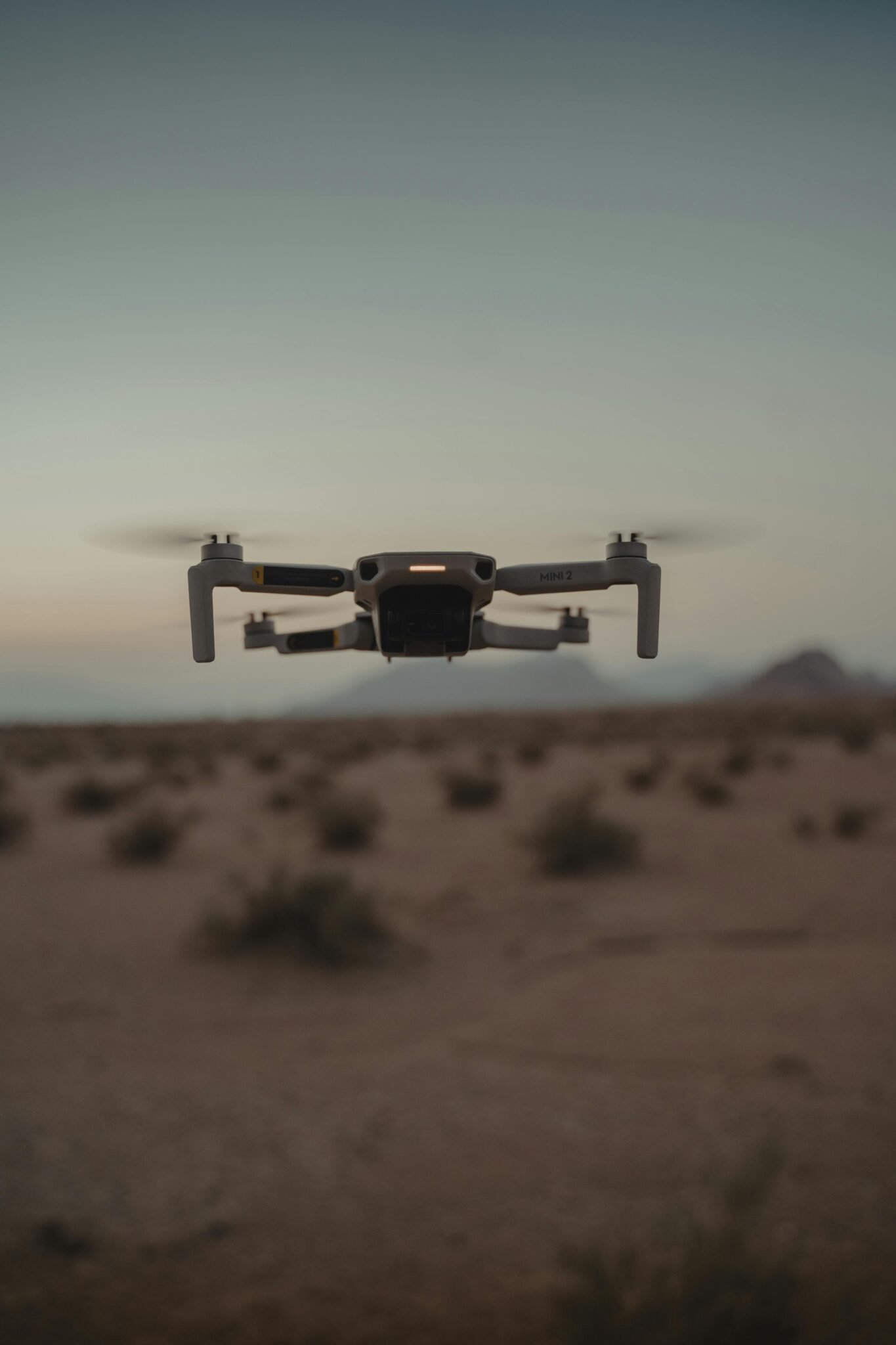




In Abu Dhabi’s sun-baked landscape, a program that fuses private AI talent with state-led defense ambition is quietly taking shape. The result could redefine how quickly autonomous systems move from concept to deployment.
Recent Trends
- Rising US–UAE defense collaborations
- AI-enabled autonomous systems
- Public-private partnerships in defense tech
AI powered drones reshape defense partnerships
A U.S. startup and a major UAE defense group are joining forces to design and manufacture a new AI-powered drone, the Omen, at a dedicated Abu Dhabi research facility. Anduril Industries, known for its sensor fusion and autonomy software, will partner with EDGE Group, the UAE’s state-owned defense contractor, to push the project forward at a 50,000-square-foot (4,645-square-meter) center in the capital. The collaboration marks a notable intensification of bilateral defense tech ties and signals a broader push toward domestically produced, AI-driven air platforms.
The UAE has long sought to diversify its defense base and reduce dependence on external suppliers. This next step goes beyond procurement; it encompasses joint development, local production, and technology transfer that could accelerate the adoption of autonomous flight in complex environments. EDGE will finance the venture as part of a broader push to cultivate a homegrown ecosystem of advanced defense capabilities.
According to The Hindu, the UAE will acquire the first 50 units, and officials described Omen as a lightweight, long-range autonomous drone capable of helicopter-like takeoff and landing while maintaining airplane-like endurance and speed. This design enables deployment from within contested areas or disaster zones without exposing operators to direct danger, a feature drawing attention from defense planners and international partners alike.
A core value proposition for the joint venture is the integration of Anduril’s Lattice AI system. Lattice coordinates multiple autonomous aircraft in real time, effectively acting as a 3D command and control center that can adapt to shifting mission requirements on the fly. In practical terms, operators could choreograph several drones for surveillance, target acquisition, or payload delivery in a coordinated sweep rather than relying on sequential, single-vehicle tasks.
Industry observers note the deal expands on decades of U.S.-UAE defense collaboration and aligns with a broader strategic arc in which allied nations pursue scalable, AI-enabled weapons and support systems. The move comes after a period of high-profile diplomatic and military exchanges, including discussions on joint capability development during high-level visits. The UAE—often nicknamed by insiders as a rapid adopter of advanced military tech—continues to invest heavily in domestic defense capabilities. EDGE, established in 2019 to foster a local defense industry, has already committed substantial funds to Omen as part of its broader industrial strategy.
For Anduril, the Abu Dhabi project represents a way to demonstrate how U.S. autonomy software and sensor fusion can be scaled in foreign markets with local production and support networks. EDGE gains access to cutting-edge U.S. tech, while Anduril expands its footprint beyond North America and Europe. The collaboration also highlights the growing role of private defense firms in shaping national security policy through dual-use technologies that blur lines between civilian AI and battlefield autonomy.
From a policy perspective, the arrangement raises questions about export controls, data sovereignty, and the transfer of dual-use AI capabilities. While the immediate program targets defense and disaster-response missions, the underlying technology could have broader implications for how nations regulate and deploy autonomous systems. The market implication is clear: more cross-border partnerships are likely as countries seek rapid access to AI-enabled platforms and the expertise to integrate them into existing armed forces and civilian resilience networks.
Reader-facing takeaway: the Omen project signals a trend where private AI developers partner with state-backed defense groups to accelerate the delivery of autonomous air systems, potentially changing who builds and who buys next-generation drones. For defense planners, the message is unmistakable: autonomous drones are moving from testing grounds to real-world operations, supported by international collaboration and local production.
Deal specifics
- Joint venture between Anduril and EDGE Group
- Omen drone development at a 50,000 sq ft Abu Dhabi center
- First production run and 50 initial UAE units planned
Industry implications
- Faster deployment of AI-enabled autonomous drones through local production
- Stronger cross-border tech ecosystems linking U.S. innovation with UAE manufacturing
- Increased focus on real-time autonomous coordination via platforms like Lattice AI
Regulatory and risk considerations
- Export controls and technology transfer norms will shape future deals
- Data sovereignty and security in joint AI systems require clear governance
As with any frontier tech, the path from prototype to squadron-ready systems will hinge on transparent governance, battlefield-tested reliability, and resilient supply chains. The collaboration offers a concrete case study in how private AI expertise can be embedded in national defense programs while raising questions about how best to manage dual-use capabilities for peaceful use and regional stability.
Conclusion
The US-UAE AI powered drone partnership signals a new era of defense tech diplomacy: private AI brilliance paired with state-backed manufacturing, scaled through joint ventures and local centers. The Omen project could become a template for how allied nations accelerate autonomous drone capability while shaping policy, industry standards, and market competition for years to come.

















