
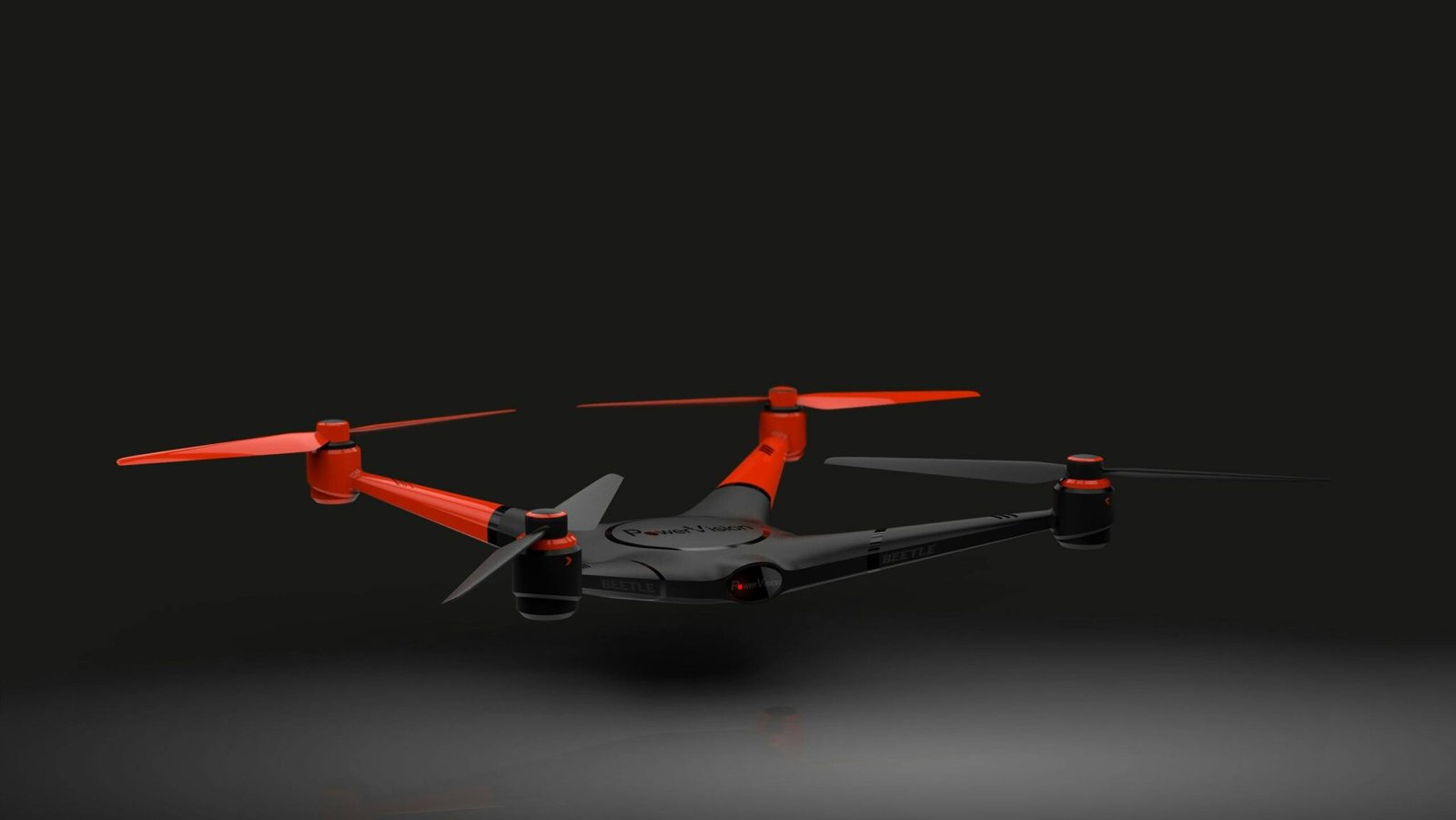




Drone Production Capacity Accelerated by Deloitte-Kihomac Deal
A quiet corner of Utah is becoming a focal point for U.S. drone manufacturing as a private investment nudges a veteran-owned supplier toward larger-scale output. A partnership announced late in October aims to boost the country’s drone production capacity by moving assembly and related work to Utah and expanding production lines for next‑generation aerial systems. The arrangement centers on Deloitte’s investment in Kihomac, a long‑time maker of aviation and aerospace components, with a clear goal: more U.S. made drones, more jobs, and a stronger domestic supply chain.
Recent Trends
- US manufacturers push to expand domestic drone production capacity
- Veteran-owned suppliers target aerospace contracts
- Policy focus strengthens defense supply chains
Kihomac opened for business in 2003 and has built its business around metal, composite and electrical components installed in aircraft systems used by Defense Department agencies and commercial customers. Beyond parts, the company provides engineering, prototyping, data development and systems engineering. The Deloitte-backed effort intends to scale Kihomac’s production footprint, specifically relocating some operations to Utah to achieve greater mass production capability for drones. Financial terms were not disclosed. Both firms say the collaboration will help meet growing demand in infrastructure inspection, emergency response and defense and security use cases, making the effort highly relevant to national security and industrial policy goals.
According to Washington Technology, Deloitte will work with Kihomac on expanding its production capacity to Utah with the aim of enabling higher-volume drone manufacturing for a broader set of customers. The companies describe the shift as a way to reduce reliance on external suppliers and strengthen local manufacturing ecosystems. This aligns with a broader policy push to reshore advanced manufacturing activities and build resilient supply chains for critical technologies. “Deloitte is investing directly in Kihomac to help build American production capacity for technologies that are critical to our national security and economic competitiveness,” said Oniel Cross, Deloitte’s hybrid cloud and edge computing leader for the government and public services practice. “This approach creates a tangible impact in terms of creating manufacturing jobs for American workers and an expanded and secure supply chain for U.S. customers.”
Ki Ho Kang, founder and CEO of Kihomac, stressed that the partnership accelerates delivery to clients while strengthening the local economy through new jobs and expanded capacity. He noted that Kihomac already supports government programs and has a footprint in a $980 million Air Force contract vehicle aimed at automated test systems, a distinction that helps illustrate the company’s technical heft and the regulatory milieu in which drone firms operate. The Navy’s Unmanned Surface Vehicle Family of Systems contract, another marquee program, also sits in the company’s portfolio, highlighting the breadth of defense‑oriented opportunities tied to domestic production capabilities.
For defense planners and industry observers, the message is clear: private capital is aligning with federal priorities to accelerate domestic drone capabilities. The move not only increases current drone production capacity but also signals a broader shift toward onshore manufacturing strategies designed to withstand supply-chain shocks. The Utah expansion is presented as a platform for sustained growth rather than a one-time push, with both parties signaling a longer‑term roadmap that could influence procurement strategies, supplier qualifications, and job creation across the regional economy.
At its core, the Deloitte–Kihomac deal is about turning theory into practice. It links a strategic private investment with real manufacturing capability, driving down cost per unit through scale while enabling more robust control of the end-to-end supply chain. It also serves as a practical example of how public-private collaboration can accelerate the adoption of advanced drone systems across civilian, commercial and defense sectors. This is not just about a single contract or a single product; it is about building a repeatable model for rapid, domestic drone production growth that can be replicated with other suppliers and in other regions.
Scale and Economic Impact
The Utah expansion is framed as a pathway to greater mass production capability for drones, with potential spillovers into supplier networks, skilled jobs and regional manufacturing capabilities. By consolidating certain activities in a U.S. inland hub, the arrangement may also support faster lead times and more predictable delivery for government and commercial customers alike. In practical terms, this could translate to shorter procurement cycles, improved after-sales support and a more reliable supply of critical drone systems for mission needs ranging from infrastructure inspection to disaster response.
Policy and Market Implications
Industry watchers will watch how this investment interacts with evolving export controls, cybersecurity requirements, and safety standards for unmanned systems. A key takeaway is that private capital can be a force multiplier for national policy goals—especially when it targets domestic manufacturing capacity in sectors deemed strategic for both security and economic competitiveness. The deal also spotlights the pressure on large defense programs to diversify their supplier base and to cultivate more resilient, local manufacturing ecosystems that can respond quickly to changing threats and opportunities.
In the near term, the partnership will be tested by program pipelines, regulatory approvals and the ability to scale without sacrificing quality. For corporations considering similar arrangements, the Deloitte–Kihomac model offers a playbook: partner with established suppliers, maintain a defense-forward portfolio, and anchor growth in a region with a ready base of skilled labor and supportive infrastructure. For readers, the core takeaway is straightforward: when private capital aligns with national priorities, drone production capacity grows in ways that can strengthen both the economy and national security.
Conclusion
As the drone market matures, the Deloitte–Kihomac collaboration illustrates how onshore manufacturing strategies can unlock capabilities that were once limited by supply-chain fragility. The shift to Utah is not just a relocation; it is a signal of how private investment and public policy can work in tandem to grow drone production capacity, reinforce the domestic supply base and create jobs. The broader lesson for the industry is that scale, supplier diversity and regional strength will be the pillars of future growth in both civil and defense drone ecosystems.

















