
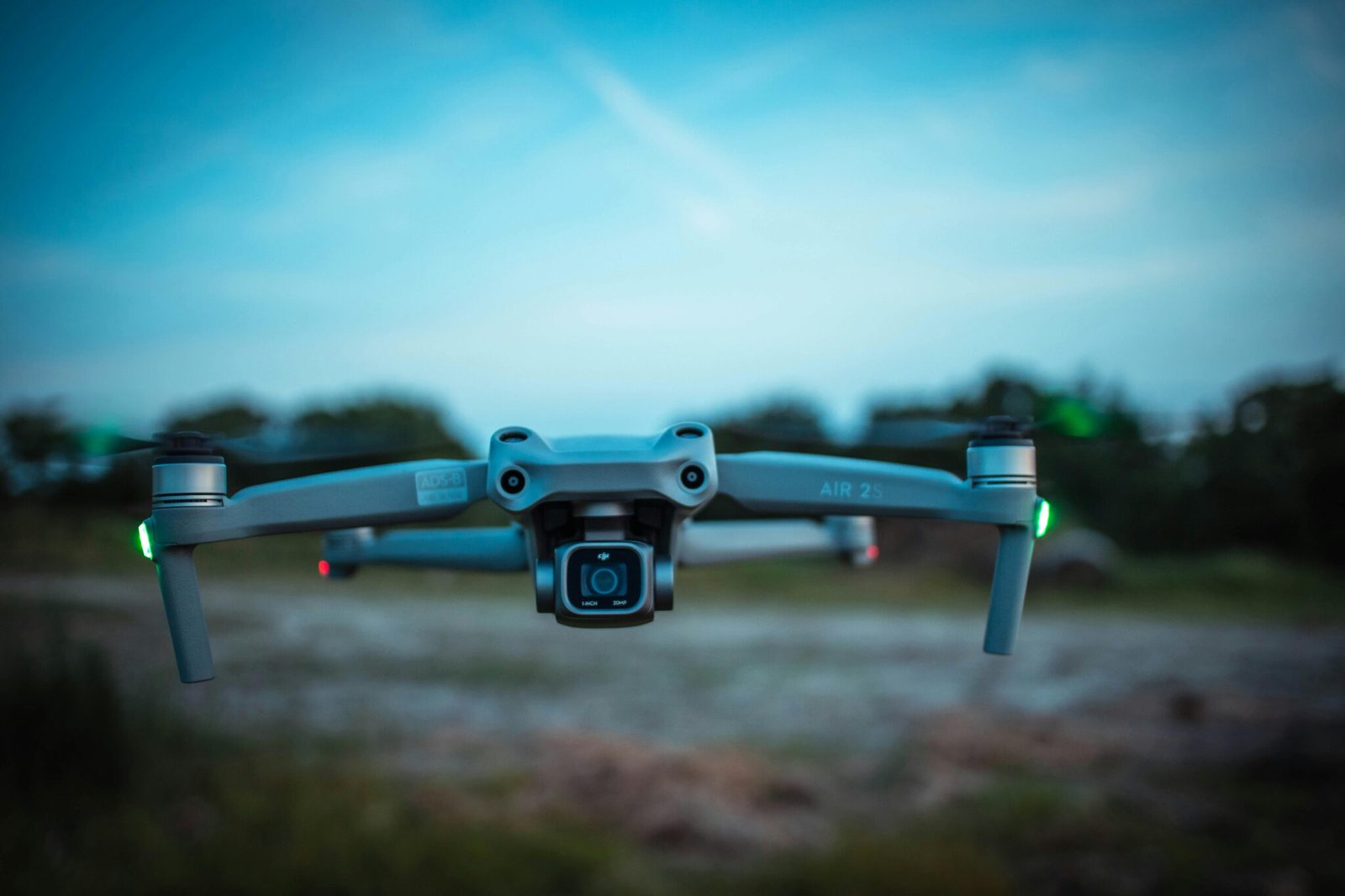




This week, the drone industry is quietly entering a new era where machines shoulder more of the heavy lifting in the cockpit. AI-driven autonomy is crossing new thresholds, enabling fleets to complete routine flights with less human input and greater reliability. This is a daily drone news brief designed to keep operators ahead of the curve. For many businesses, the headline is simple: more tasks, fewer people, safer skies.
Recent Trends
- AI-based path planning gains pace in commercial drones
- BVLOS waivers expanding for logistics pilots
- Urban last-mile drone deliveries inch toward scale
drone autonomy reshapes operations
Across sectors, drone autonomy is moving from experimental pilots to widespread deployment. Perception, planning, and control modules are coming together as a cohesive stack. Drones equipped with advanced sensors and edge computing can understand a scene, identify safe routes, and execute complex maneuvers with minimal operator input. The result is not just faster flights; it is a measurable lift in safety margins and mission reliability. In practical terms, drone autonomy reduces operator workload and expands flight opportunities into airspace corridors that were once reserved for trained pilots only.
Grounding the trend in real-world use
This week we’re seeing autonomous capabilities push into the logistics and healthcare supply chains. UPS Flight Forward and Zipline are expanding pilots that rely on autonomous flight to move parcels and medical goods along fixed corridors. DHL and Matternet are testing autonomous mid-range flights for time-sensitive shipments, leveraging redundancy and fault tolerance to maintain continuity even when a sensor or link edge fails. These deployments illustrate drone autonomy in action: fewer manual inputs, more predictable outcomes, and a clearer path to scale. For readers, the takeaway is that drone autonomy is not a distant dream; it is delivering real, path-saving results today.
Regulatory and safety implications
Regulators are adapting at pace. In the United States, the FAA is accelerating BVLOS (beyond visual line of sight) waivers and pushing toward a more usable UTM framework that can manage multiple autonomous fleets in shared airspace. Europe’s EASA is moving to a risk-based approach that favors standardized remote identification, robust cyber defenses, and clear operator responsibilities when autonomy is involved. The net effect is a more permissive airspace for vetted autonomous missions, paired with stronger safety nets. For operators, this means better access to corridors and more predictable risk profiles, which is essential for scaling drone autonomy across city-centre logistics and industrial inspection tasks.
Why this shift matters for the market
Drone autonomy is a force multiplier. Fleets can cover more ground with fewer pilots, reducing labor costs while increasing consistency. Insurance models are evolving to reflect lower human-error risk and higher system redundancy, which in turn lowers the total cost of ownership for autonomous solutions. New players are entering with modular autonomy stacks that can be retrofitted to existing drones, broadening the addressable market from enterprise fleets to regional service providers. In this dynamic, the primary beneficiaries are industries that rely on fast, reliable, and safe last-mile deliveries, remote inspections, and time-sensitive medical logistics. This is where the market is heading: autonomy as the baseline, not the exception.
What operators should do now
Operators should prioritize three things to capitalize on drone autonomy: first, invest in edge computing and redundant sensors to ensure continuity when one data stream fails. Second, align with regulators on BVLOS pathways and uniform remote ID compliance so flight plans can scale without repeated approvals. Third, build data-driven safety cases that quantify how autonomy reduces risk and extends mission profiles. The practical advice is simple: adopt modular autonomy that can grow with your fleet and your regulatory clearance, rather than chasing a single, custom solution that only fits one use case. This is how resilience becomes a competitive differentiator in a crowded market.
Industry voices and future outlook
Industry leaders say the next 12–24 months will be defined by interoperability. Drones will exchange data with airspace managers, airports, and logistics hubs in near real time, enabling safer, more predictable autonomous missions. Expect more collaborations between drone manufacturers, software developers, and regulation authorities to codify best practices for autonomy in routine missions. In short, drone autonomy is being standardized as a core capability. For defense planners, commercial operators, and city planners, the message is clear: plan for autonomy as a shared foundation that enhances efficiency, safety, and scalability.
Conclusion
Summary: This week highlights a clear acceleration of drone autonomy across operations, paired with real-world deployments, regulatory readiness, and a path toward scalable, safe, autonomous missions. Why it matters: autonomy reduces risk, expands mission types, and lowers costs, signaling a new baseline for the industry. The takeaway is forward-looking: invest in a modular autonomy stack, align with BVLOS and UTM developments, and design operations around continuous, safe automation. The drone market is moving from testing autonomy to deploying it at scale; operators who embrace this transition will lead the next wave of aerial services.

















