


In the bustle of city skies, AI-powered drones are expanding what is possible for inspections, delivery, and emergency response. Operators report faster data gathering, safer flights, and the chance to replace risky manual work with autonomous systems. This is today’s drone market update for industry professionals. This week an interesting development is the shift toward deploy-and-forget operations: drones that can survey a construction site, deliver small parts, and report anomalies with minimal human intervention.
Recent Trends
- Swarm drone tech scales up for city-wide surveys
- Regulatory updates unlock BVLOS testing
- Payload integration expands mission versatility
AI drone automation is the common thread linking these shifts. It unlocks BVLOS (beyond visual line of sight) operations, enables advanced sensing, and coordinates multi-vehicle flights. The market is seeing a mix of commercial players like DJI, Skydio, and Auterion test AI-enabled autonomy for urban inspection, agricultural monitoring, and logistics. For operators, AI drone automation promises to cut downtime and reduce risk by letting machines handle routine decisions while humans focus on interpretation and strategy.
Swarm drone tech and autonomous inspections
Swarm drone tech allows multiple drones to share data, optimize flight paths, and cover large areas quickly. In practice, a coordinated quartet can survey a roof or bridge and stitch 3D models in minutes, spotting corrosion, cracks, or moisture leakage more reliably than a single drone. DJI’s ongoing AI improvements in its Matrice platform and Skydio’s perception stack illustrate how autonomy is moving from trick to standard. The result is not just speed but richer datasets for industrial inspection, energy, and infrastructure.
Payload integration and last-mile potential
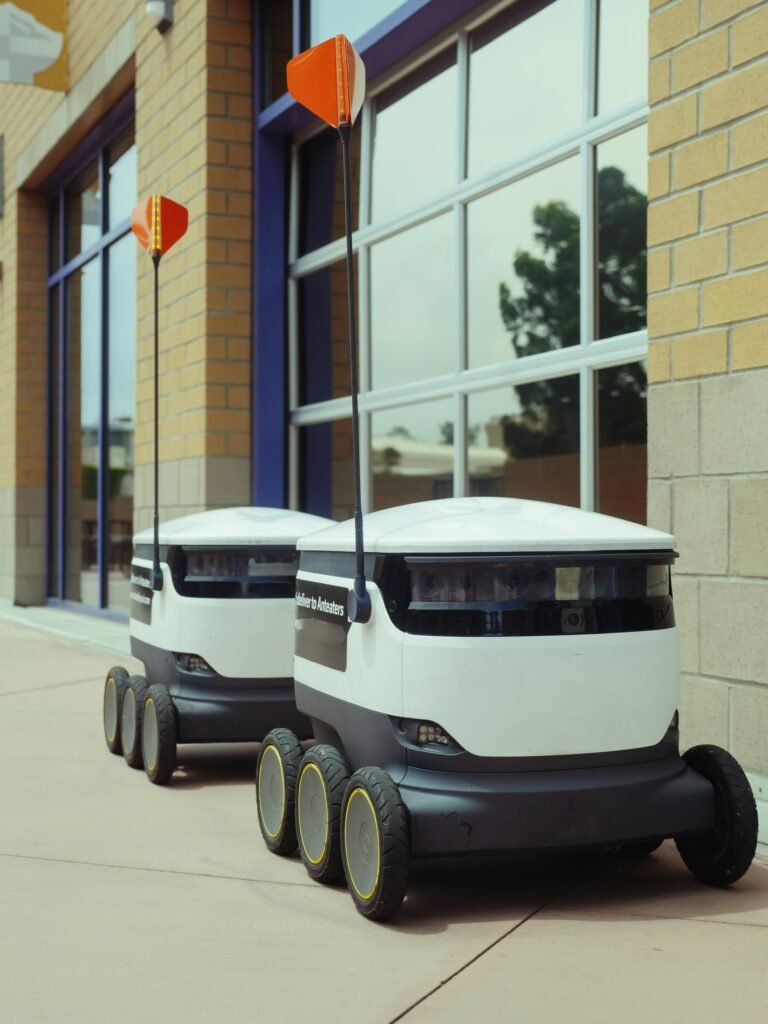
Payload integration is expanding what a drone can carry and why it matters. Industry teams are mixing high-resolution RGB cameras, thermal imagers, and compact LiDAR modules into modular setups, enabling rapid swap-out for targeted missions. This makes last-mile delivery on campuses, hospital precincts, and dense urban corridors practical. The trend aligns with urban air mobility ambitions—drones handling delivery legs while larger aircraft handle long-haul work.
Regulatory updates and practical guidance
Regulators are adapting to AI drone automation with a mix of caution and ambition. In the United States, the FAA’s BVLOS waivers are expanding under test programs, while in Europe, EU U-space initiatives aim to streamline airspace access for automated fleets. For operators, the practical takeaway is to pursue a staged approach: mature the sense-and-avoid stack, maintain robust flight logs, and partner with certified providers to ensure compliance. This is not about risky leaps but incremental expansion that builds trust with regulators and customers.
If you are a drone operator, this is a clear signal to plan for scaled autonomy rather than one-off trials. AI drone automation is changing how data is gathered, processed, and turned into action, so aligning with open data standards and interoperable tools will be a competitive edge.
Beyond the headlines, the commercial case for AI drone automation rests on data quality and reliability. Drones collect streams of imagery, thermal data, and 3D models that must be timestamped, geotagged, and interoperable with existing workflows. Companies embracing open interfaces and vendor-neutral data formats will outpace rivals that lock data in proprietary silos. Early adopters are reporting faster incident response times, safer inspections, and clearer ROI as pilots shift from manual handling to smart routines. This trajectory suggests a not-so-distant future where AI drone automation is standard in civil sectors like infrastructure, energy, and logistics.
Conclusion
Today’s update shows AI drone automation driving practical gains across urban inspection, delivery, and emergency response. Swarm drone tech is accelerating coverage and data richness, while payload integration multiplies mission versatility. Regulatory updates are finally creating clearer paths to BVLOS and broader use. For operators, the takeaway is simple: embed AI-driven autonomy into workflows, not just pilots, to unlock faster, safer, and more cost-effective missions as the market shifts toward scalable, interoperable solutions.