
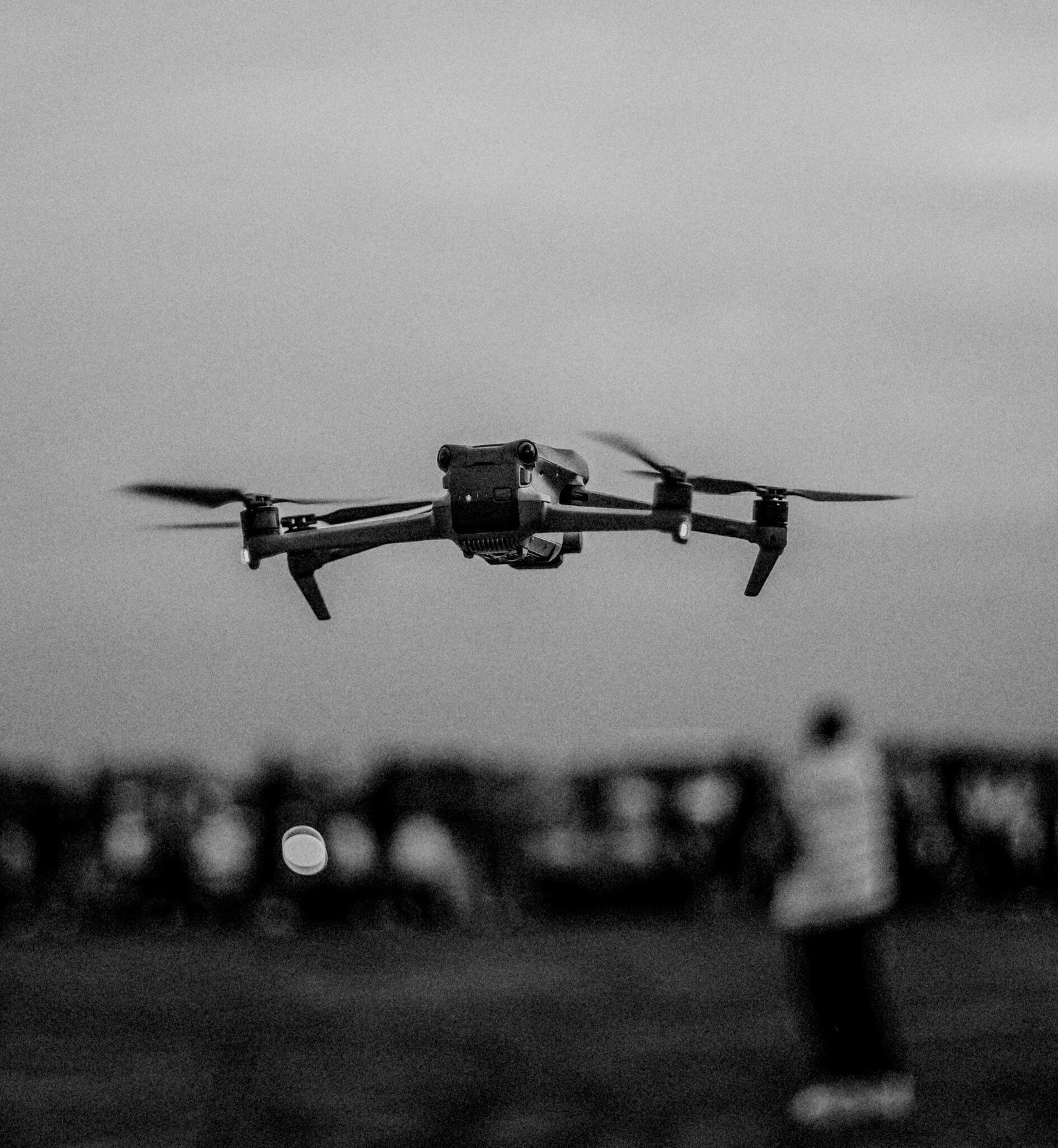




Urban life is expanding to smarter, more interconnected environments. Cities are leaning on data-driven safety measures, and large public events are increasingly common in a post pandemic era. In this context, drone crowd monitoring is shifting from a niche capability to a mainstream tool for safety, logistics, and crowd management. Operators are learning how aerial data can reveal crowd density, movement patterns, and potential bottlenecks in real time. For defense planners, event organizers, and city operators, that shift matters because it changes how quickly responses can be coordinated and resources allocated.
Recent Trends
- AI analytics improve real-time crowd insights
- Downscaled components drive lower total cost of ownership
- Integrated thermal sensing expands day and night use
Market momentum for drone crowd monitoring is rising fast. A forecast cited by MENAFN, drawing on The Business Research Company, projects the market climbing to $5.35 billion by 2029 from roughly $1.98 billion in 2024, a compound annual growth rate (CAGR) near 21.9%. The trend lines reflect broader urbanization, the spread of smart city programs, and a surge in events ranging from sports to festivals. This growth isn’t just about hardware; software, data analytics, and cloud-based monitoring are central to turning aerial feeds into actionable intelligence. The takeaway for executives is clear: invest in end-to-end capability, not just gadgets.
Drone crowd monitoring is increasingly viewed as a safety and operations multiplier for large gatherings. When the public space swells with people, the ability to see from above helps planners manage crowd flow, identify hotspots, and deploy security or medical resources before a problem escalates. The Market is being driven by more robust drone platforms, better AI-enabled analytics, and tighter integration with public safety and event management teams. As one industry observer notes, the approach lets responders see a panorama that ground teams might miss, then quickly translate that view into concrete actions on the ground.
Industry reports highlight several players shaping the space. Autel Robotics, Skydio, Quantum Systems, and Parrot are repeatedly cited as leaders in hardware and ecosystems, while service providers like Drone Nerds and American Robotics expand offerings through integrators and managed services. These vendors push a market where hardware price points continue to fall while software platforms gain sophistication. For buyers, that means more modular choices: hardware that can be paired with AI analytics, flight control software, and data visualization tools to tailor solutions for a specific event or jurisdiction.
Geographic dynamics also bear watching. North America has led the market recently, but Asia-Pacific is expected to show the strongest growth during the forecast window as governments and cities accelerate smart city initiatives and adopt more public-event surveillance. In Europe, operators emphasize privacy by design and regulatory compliance as they scale. The regional mix matters for buyers because it shapes available standards, data handling practices, and vendor ecosystems.
One real-world example of rapid advancement is Garuda Aerospace in India, which announced the Trishul Border Patrol Surveillance Drone in March 2025. This platform combines high-definition and infrared cameras with LIDAR and radar to collect data on crowd count, movement, speed, and potential threats. For large public events or security scenarios, such capabilities offer a more complete picture than camera arrays alone. It also demonstrates how a single drone can carry multiple sensing modalities to deliver timely situational awareness.
From a buyer’s standpoint, the market signals an ecosystem shift. It’s not enough to have a drone that flies; success depends on how well that drone’s data integrates with analytics, command centers, and decision workflows. Vendors are responding with analytics-as-a-service, interoperable flight software, and data-privacy controls to address public concerns. The result is a more capable, but also more complex, value proposition that requires careful vendor evaluation and clear use-case alignment.
In practice, this means operators should look for a holistic package: reliable hardware, scalable software, and a clear data governance approach. The rise of AI-driven analytics reduces the time between data capture and decision, which is essential for real-time crowd management. It also means rethinking budgets: total cost of ownership now includes software licenses, cloud processing, and ongoing security updates in addition to the drone itself.
Market implications and guidance for users
For event organizers and public-safety teams, the payoff is safer crowds, smoother logistics, and faster incident response. For city planners, the data can inform transit management, emergency planning, and crowd-friendly infrastructure enhancements. Yet the expansion also raises privacy and civil-liberties concerns that regulators will watch closely. As the market grows, expect more standards and better data governance practices to emerge.
Key takeaways for buyers and operators
- Prioritize end-to-end solutions that combine drones, AI analytics, and data visualization in a single workflow.
- Evaluate privacy controls and compliance with local laws before deployment at public events.
- Consider region-specific support and regulatory alignment when choosing vendors.
- Plan for ongoing software updates and data-security commitments as part of the total cost of ownership.
Conclusion
The trajectory for drone crowd monitoring is clear: more capability, broader adoption, and deeper integration with public-safety and event-management workflows. The projected rise to $5.35 billion by 2029 signals a mature market where buyers demand more than hardware. They want reliable analytics, scalable platforms, and governance that protects privacy while enhancing safety. For operators and city planners, the message is simple: build cross-functional solutions that can turn aerial insights into fast, trusted decisions.

















