
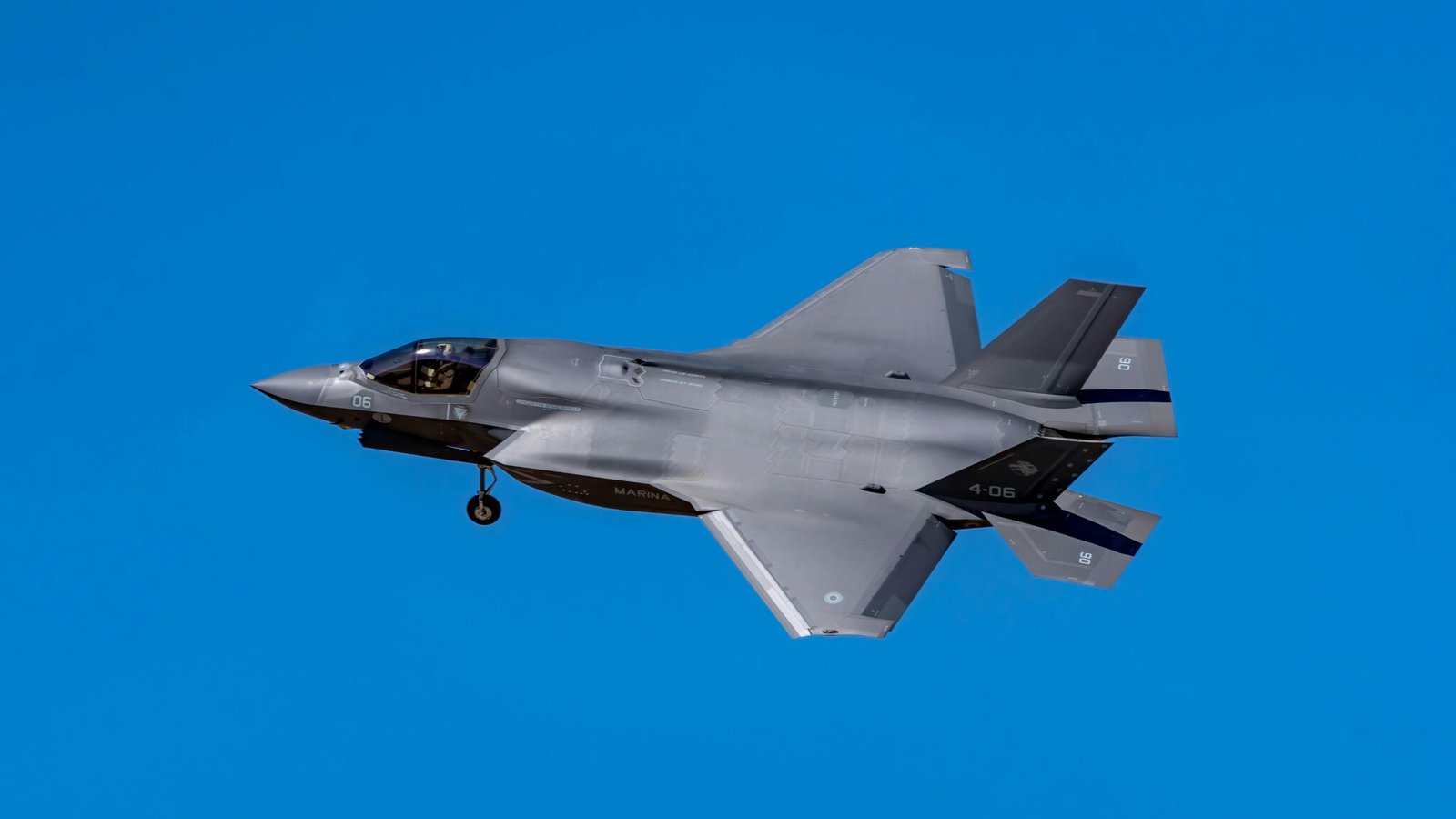




Lockheed Martin stands at a crossroads of air power and unmanned systems as a wave of new orders signals a broader push into drone-enabled warfare. The company is tying large-scale fighter production to a parallel push in autonomous capability, anchored by its Fort Worth footprint.
Recent Trends
- Defense procurement cycles accelerate
- Drones augment manned systems for mission flexibility
- Stealth drone concepts move toward open architecture and deployable payloads
On September 29, Lockheed Martin Aeronautics was awarded contracts worth about $24.3 billion for 294 F-35 aircraft to be used by all military branches and foreign allies. The defense contracts call for deliveries to begin in 2026 with most of the assembly work slated to occur in Fort Worth.
“The F-35 Lot 18-19 contract represents continued confidence in the most affordable and capable fighter aircraft in production today,” Chauncey McIntosh, Lockheed Martin vice president and general manager of the F-35 Lightning II program, said in a statement. “We are proud to support our customers and further solidify the F-35’s role in enabling peace through strength.”
According to the Fort Worth Report, the Lot 18-19 award covers 294 F-35s for U.S. and allied forces, with deliveries starting in 2026 and most assembly centered in Fort Worth. The broader award underscores a steady cadence in major defense procurement while Lockheed expands its industrial footprint.
Beyond fighters, the company is pushing into autonomous systems. A new stealth drone developed by Lockheed Martin’s secretive Skunk Works division could fly in late 2027. The Vectis drone, a reusable autonomous platform, was discussed at the Air Force Association’s 2025 Air, Space & Cyber Conference in Bethesda, with Breaking Defense reporting that prototype parts are ordered and a flight in the open air is planned within two years. Skunk Works vice president and general manager OJ Sanchez said the team is progressing toward flight while keeping design flexible to adapt to evolving battlefield threats. The Vectis concept can be paired with Lockheed’s F-22 or F-35 fighters, illustrating a vision in which manned and unmanned aircraft operate as a cohesive system of systems.
Meanwhile, Sikorsky Aircraft Corp., another Lockheed Martin company, unveiled a converted unmanned Black Hawk helicopter called the U-Hawk at the Association of the U.S. Army’s conference in Washington, D.C. The Nomad family of drones can scale for sea- and land-based missions, offering larger payloads and the potential for drone swarms in future operations. Rich Benton, Sikorsky’s vice president and general manager, emphasized that the transformation from concept to reality happened in under a year, and the multi-mission payload approach can be replicated quickly and affordably.
Eric E. Garcia is a senior business reporter for the Fort Worth Report. His coverage here reflects a broader industry shift toward more integrated air power, where stealth jets share the stage with adaptable unmanned platforms. For defense planners, the message was unmistakable: the future hinges on rapid coupling of high-end fighters with flexible UAS assets to navigate contested airspaces and evolving threat landscapes.
The article also touches on policy and operational risk. Officials noted that the federal government shutdown could test Lockheed’s ability to sustain programs and suppliers. The company said it is coordinating with U.S. government customers to assess impacts on personnel and ongoing missions while keeping essential operations running and mitigating disruption.
From a market perspective, the rapid push into unmanned systems signals a broader rebalancing in defense contracting. Suppliers, contractors, and regulators will increasingly weigh how to ensure interoperability, safety, and export controls as unmanned platforms scale across services and allied partners. The Fort Worth footprint remains a bellwether for how large programs connect with agile, autonomous development pipelines, a dynamic likely to shape competition among major defense incumbents in the coming years.
For readers seeking a practical takeaway: expect more cross-pollination between fighter aircraft programs and UAS projects, with test beds that blend Stealth, autonomy, and networked sensors to extend battlefield reach while reducing risk to human operators.
As Lockheed advances Vectis and Sikorsky scales U-Hawk and Nomad variants, the industry is moving toward a future where the line between piloted and unmanned airframes blurs. That shift has implications for training, maintenance, and the rules that govern autonomous systems in conflict zones. Stakeholders—from air forces to Congress—will scrutinize cost, safety, and interoperability in the months ahead.
Conclusion
Lockheed’s $24.3 billion F-35 win, paired with a rapid push into stealth drones, signals a strategic pivot: air superiority programs will increasingly hinge on integrated unmanned systems. With Vectis poised to fly by 2027 and U-Hawk expanding payload options, the defense industrial base is accelerating an era where the fastest route to victory is a synchronized mix of manned jets and autonomous platforms. The coming years will test how well industry partners, regulators, and allied forces align to reap the benefits while managing risk.

















