
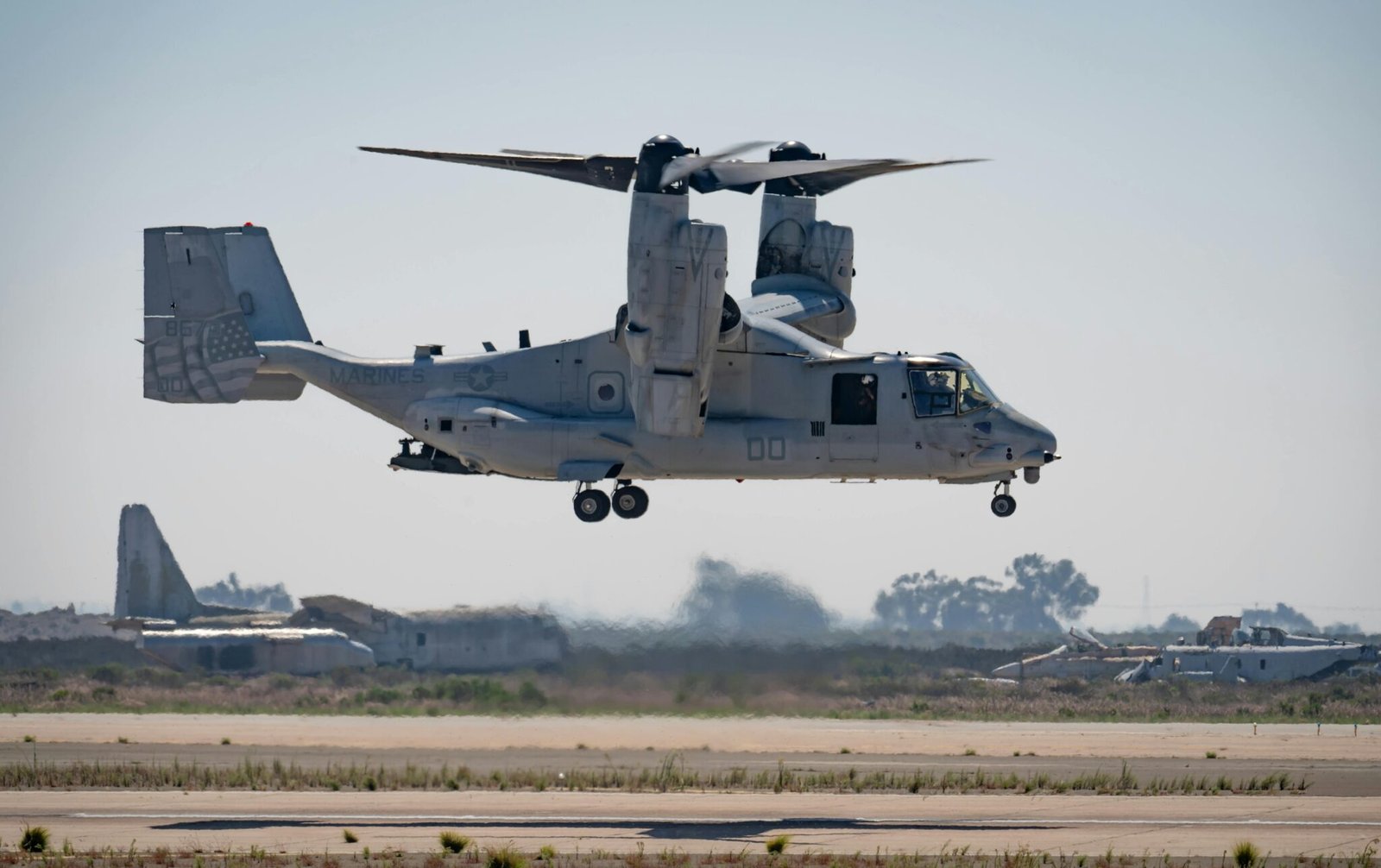




Nomad VTOL Drone Redefines Battlefield Mobility
A drone that lifts off like a helicopter yet sprints across the sky like a jet signals a turning point for how wars are fought and how aid is delivered. Sikorsky, a Lockheed Martin company, has introduced the Nomad family of vertical takeoff and landing aircraft designed for autonomous operation across military and civilian missions. The concept centers on runway independence, enabling missions in contested or remote environments where traditional airfields are unavailable.
Recent Trends
- Runway-free drones gain traction in defense
- Autonomous aerial systems expand civilian use cases
- Hybrid-electric propulsion extends drone endurance
The Nomad VTOL drone uses a twin-proprotor rotor-blown wing design that lets the rotor lift the craft vertically and then transition to efficient forward flight. This hybrid approach mirrors what many air forces want: a platform that can hover over a location, map terrain, then accelerate to speeds comparable with fixed-wing aircraft. The design supports operations from land bases to sea-based platforms, broadening their utility in maritime theaters and inland settings alike. The focus on a runway-free capability underscores a strategic shift toward mobility in contested zones where airstrips are scarce.
Notes from the field: the Nomad VTOL drone integrates MATRIX autonomy technology, a software-and-sensor suite developed with DARPA collaboration to plan routes, avoid obstacles, and perform missions with minimal human input. The system has been tested on rotary and fixed-wing platforms and has shown promise in aerial firefighting, logistics resupply, and advanced aerial mobility missions.
The current milestone is the Nomad 50, a 10.3-foot wingspan version that demonstrated the rotor-blown wing’s favorable aerodynamics and vertical lift during a 2025 test campaign. Sikorsky is also developing the larger Nomad 100, an 18-foot wingspan Group 3 variant, with first flight anticipated in the coming months. The family is designed to be scalable from Group 3 systems weighing 56 pounds to heavier configurations exceeding 1,320 pounds for Group 4 and 5 classes, all without runways.
Most Nomad variants rely on fuel-efficient hybrid-electric propulsion to balance endurance with payload, while larger models will use conventional drivetrains to enable longer range and heavier cargo. The modular airframe design allows tailoring for reconnaissance, light attack, contested logistics, or humanitarian operations, with the ability to operate alongside crewed aircraft such as the Black Hawk to extend situational awareness and logistics networks.
For defense planners, the implication is clear: runway-independent drones could reshape mission staging, especially in the Indo-Pacific where dispersed bases and long distances complicate air operations. The Nomad approach aligns with the Pentagon’s push for affordable, rapidly deployable autonomous systems capable of surviving contested airspace without heavy reliance on runways. For readers, the trend signals lower logistical risk in remote theaters and faster humanitarian responses.
In civilian contexts, the Nomad family could assist firefighting, disaster relief, or search-and-rescue missions where fixed airstrips are scarce. The move toward autonomous, joint-use platforms helps blur the line between military and civilian drones, a trend seen across operators seeking to maximize asset utilization while reducing risk to personnel.
Operational Context and Market Outlook
Within the defense ecosystem, the Nomad’s autonomy and runway independence reflect a shift toward autonomous aerial systems that can operate in contested airspace without constant human oversight. The architecture—hybrid propulsion, modular airframes, and MATRIX autonomy—illustrates a path toward scalable fleets that can be deployed quickly for reconnaissance, logistics, or light-attack roles. This is the kind of capability that could deter adversaries and accelerate post-conflict recovery efforts.
As part of this trend, the U.S. defense community continues to explore partnerships with industry to mature these platforms. The Nomad effort fits into a broader push toward affordable, rapidly deployable, and robust autonomous options that complement existing crews rather than replace them entirely. Think of the Nomad as a nimble, scalable platform that can hover, maneuver, and then sprint to the next objective in a single mission.
Conclusion
In short, the Nomad VTOL drone family marks a meaningful shift in how drones support both military operations and civilian missions. By blending helicopter-style takeoff with jet-like cruise, it promises broader reach, reduced danger to human operators, and more versatile mission profiles. The ongoing work, including a potential Nomad 100, will shape how policymakers and defense contractors define autonomy in real-world use. The trend is clear: runway independence is becoming a practical feature, not a novelty.
FAQs
- What is a Nomad VTOL drone? A versatile unmanned aircraft that can take off and land vertically and cruise efficiently in forward flight, designed for autonomous operation.
- Who is building Nomad? Sikorsky, a Lockheed Martin company, with DARPA collaboration on its MATRIX autonomy suite.

















