
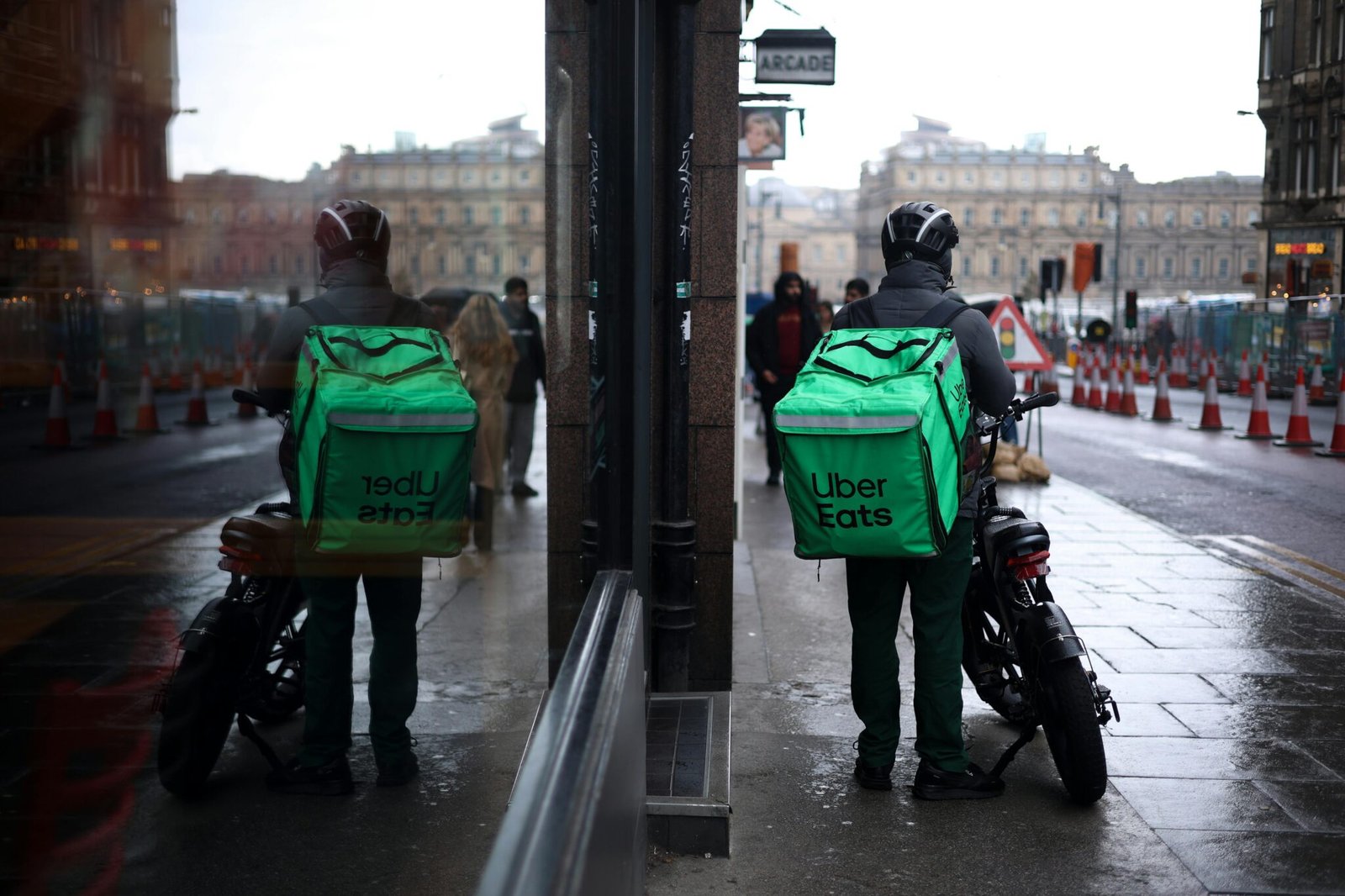




A skyward delivery of a dinner might sound like sci‑fi, but it could become an everyday habit sooner than you think. Uber Eats has announced a strategic collaboration with Flytrex to begin test-market drone deliveries in the United States by the end of this year. The initiative signals a major push by Uber into autonomous logistics, aiming to speed meals from kitchen to doorstep with the push of a button rather than a traditional courier in a car or on a bike.
Recent Trends
- Surge in autonomous delivery pilots
- Regulatory progress for BVLOS drone flights
- Shift to on-demand micro-fulfillment in cities
In practical terms, the rollout will start in carefully chosen markets where airspace and ground operations can be managed at scale. Flytrex, which operates drones in several U.S. markets including Texas and North Carolina, brings a track record of rapid, curbside-friendly deliveries and an emphasis on safety and efficiency. The plan leverages Flytrex’s long‑running experience in food and goods deliveries and Uber’s massive consumer network to test how a skyborne route could complement existing ground-based logistics.
Flytrex is a Tel Aviv‑based company whose drones are designed to operate beyond visual line of sight (BVLOS), a capability that, if approved, enables more extensive and scalable delivery networks while meeting stringent safety standards. This partnership is framed as a performance experiment to evaluate speed, reliability, consumer acceptance, and the potential environmental benefits compared with traditional curbside delivery.
“With Flytrex, we’re entering the next chapter—bringing the speed and sustainability of drone delivery to the Uber Eats platform, at scale, for the first time,” Uber’s president of autonomous mobility and delivery, Sarfraz Maredia, said when describing the collaboration. The emphasis is on turning a once-futuristic concept into a practical, city-scale service that can complement on‑demand food delivery rather than replace it wholesale.
According to Fox News, Flytrex has already logged more than 200,000 successful deliveries across the United States, and its aircraft are FAA-certified to operate BVLOS. That certification is a critical gating factor for any wide rollout, signaling a readiness to navigate the complex mix of safety rules, airspace management, and local permitting that comes with urban drone use. The data point underscores the credibility behind a high-volume drone program and helps investors, regulators, and potential partner companies gauge what a scalable service could look like in real-world conditions.
For consumers, the prospect is compelling: meals, snacks, or essentials arriving in minutes rather than tens of minutes or longer. The potential benefits extend beyond convenience to traffic reduction and lower emissions if drones replace some ground deliveries. Yet the reality remains that initial availability will be limited, likely concentrated in suburban corridors where airspace is easier to manage and the density of delivery demand is predictable. The broader question is how quickly regulators will expand BVLOS allowances and how cities will adapt air and ground infrastructure to accommodate frequent, small-box deliveries from overhead routes.
From an industry perspective, the Uber‑Flytrex collaboration aligns with a broader shift toward flexible, multichannel delivery networks. Other players like Google’s Wing, Zipline, and Prime Air are pursuing similar models with hospital, retail, or e‑commerce partners. For the wider logistics ecosystem, the implication is clear: if drone deliveries prove reliable at scale in controlled pilot zones, a more distributed, on‑demand urban logistics network could begin to displace portions of traditional courier routes. The result could be shorter delivery windows, reduced street congestion, and new business models built around micro‑fulfillment hubs and direct-to-consumer air routes.
How the partnership could reshape the delivery landscape
The integration of drone deliveries into a mainstream platform raises several practical considerations. First, urban airspace management will need to evolve to handle more frequent BVLOS flights, traffic separation, and emergency return procedures. Second, the customer experience must stay consistent: on‑time arrivals, predictable pricing, and reliable order accuracy are non‑negotiables for consumer adoption. Third, operators will need to balance cost and safety—drone maintenance, battery swaps, and ground-handling logistics all influence the unit economics of drone meals.
From a policy perspective, regulators will be watching closely to ensure that city neighborhoods benefit from the new service without sacrificing privacy or noise comfort. While suburban rollouts might proceed more quickly, true city‑wide adoption will require interoperable airspace rules, robust remote ID compliance, and clear post‑market surveillance data to reassure communities and local authorities. The current exploration by Uber and Flytrex provides a real-world test bed for such regulatory choreography, offering lessons for other commerce sectors contemplating BVLOS operations.
What this means for consumers and businesses
For consumers, the possibility of a hot meal arriving by air brings a practical, if still nascent, glimpse into the future of rapid delivery. For businesses, the model offers a potential pathway to expand coverage with fewer ground vehicles, lower congestion, and marginally lower emissions if powered by efficient batteries and optimized flight paths. It also signals a broader competitive dynamic: food delivery is no longer a single‑mode service but a portfolio of options—cars, bikes, sidewalks bots, and now drones—each playing a role in a hybrid ecosystem.
FAQ
- When will the test markets launch? Uber and Flytrex expect to begin testing by the end of 2025, with initial deployments in select markets.
- Will drone deliveries replace human couriers? Not in the near term. The aim is to augment existing networks, improve speed, and extend coverage, particularly in areas where traffic and distance pose challenges.
- What about safety and privacy? The pilots emphasize safety standards and regulatory compliance, including BVLOS capabilities and compliance with local airspace rules; privacy considerations are being addressed through flight patterns and data handling protocols.
Conclusion
The Uber Eats and Flytrex collaboration marks a notable inflection point for drone‑enabled logistics. If the tests prove scalable and consumer demand remains strong, urban delivery could become a multi‑modal system in which skies supplement streets rather than replace them. For now, the industry is watching closely to see whether autonomous food delivery can deliver on speed, reliability, and sustainability in real city environments. As regulators, operators, and consumers gain hands‑on experience, the next chapters will reveal how quickly drone food delivery becomes a routine option in everyday life.

















